Bika
GuideAutomation

X(Twitter) – Upload Media

X(Twitter) – Upload Media

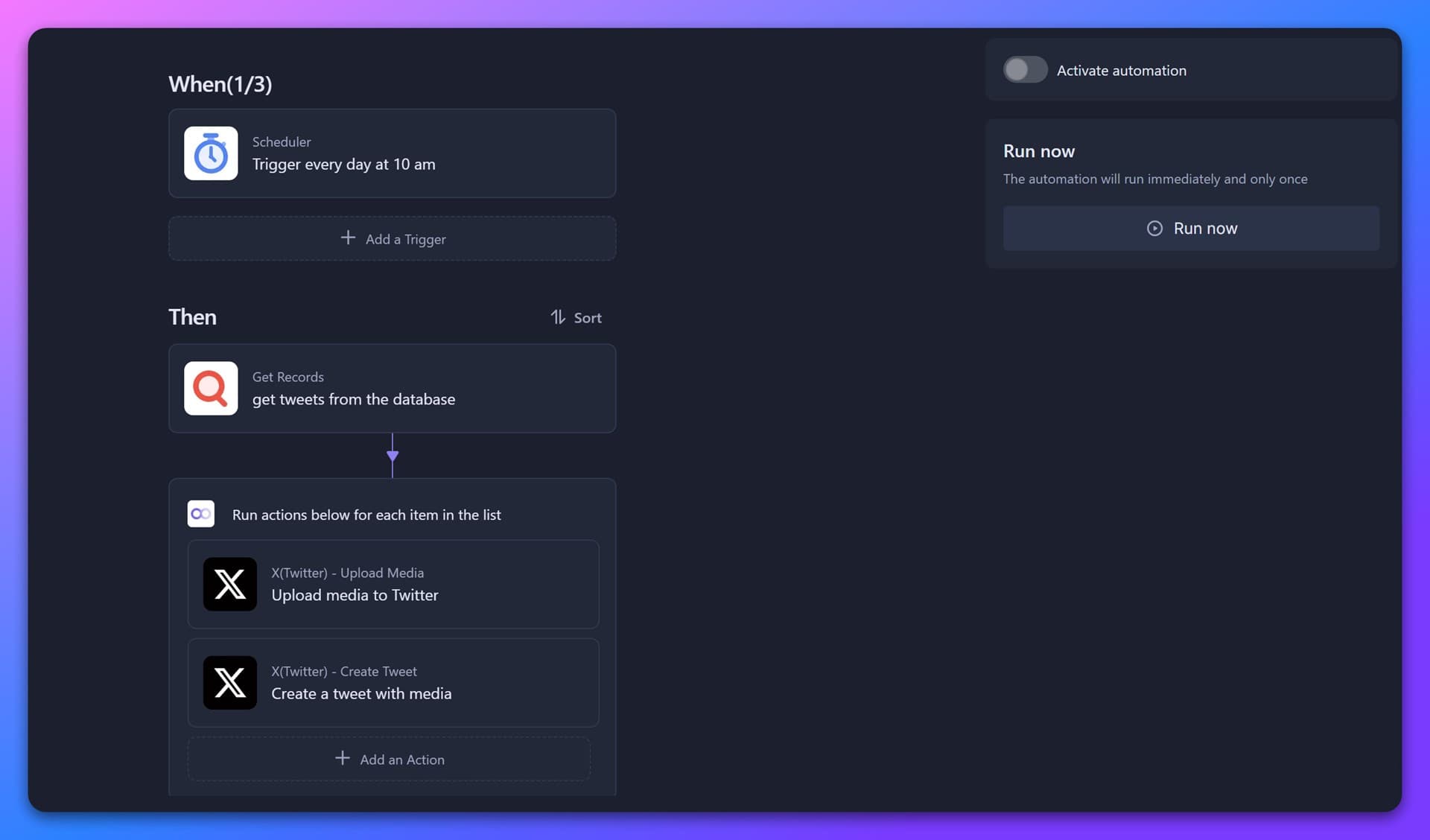
This automation action uses the X(Twitter) OAuth1.0a integration to upload one or more media files (images, GIFs, or videos) to your authorized X account. Once uploaded, it returns media IDs that you can use in a "Create Tweet" action to publish tweets with media attachments.

ℹ️ Tip: To post a tweet with media, use Upload Media first, then pass the resulting mediaIds into the Create Tweet action.

Illustration of the "X(Twitter) – Upload Media" action

💡 Configuration Instructions

Before you start, make sure you’ve completed the "X(Twitter) OAuth1.0a Integration" and connected your X account to Bika.

1. Add the “Upload Media” Action

  1. In your automation editor, click Add Action and select X(Twitter) – Upload Media from the dropdown.
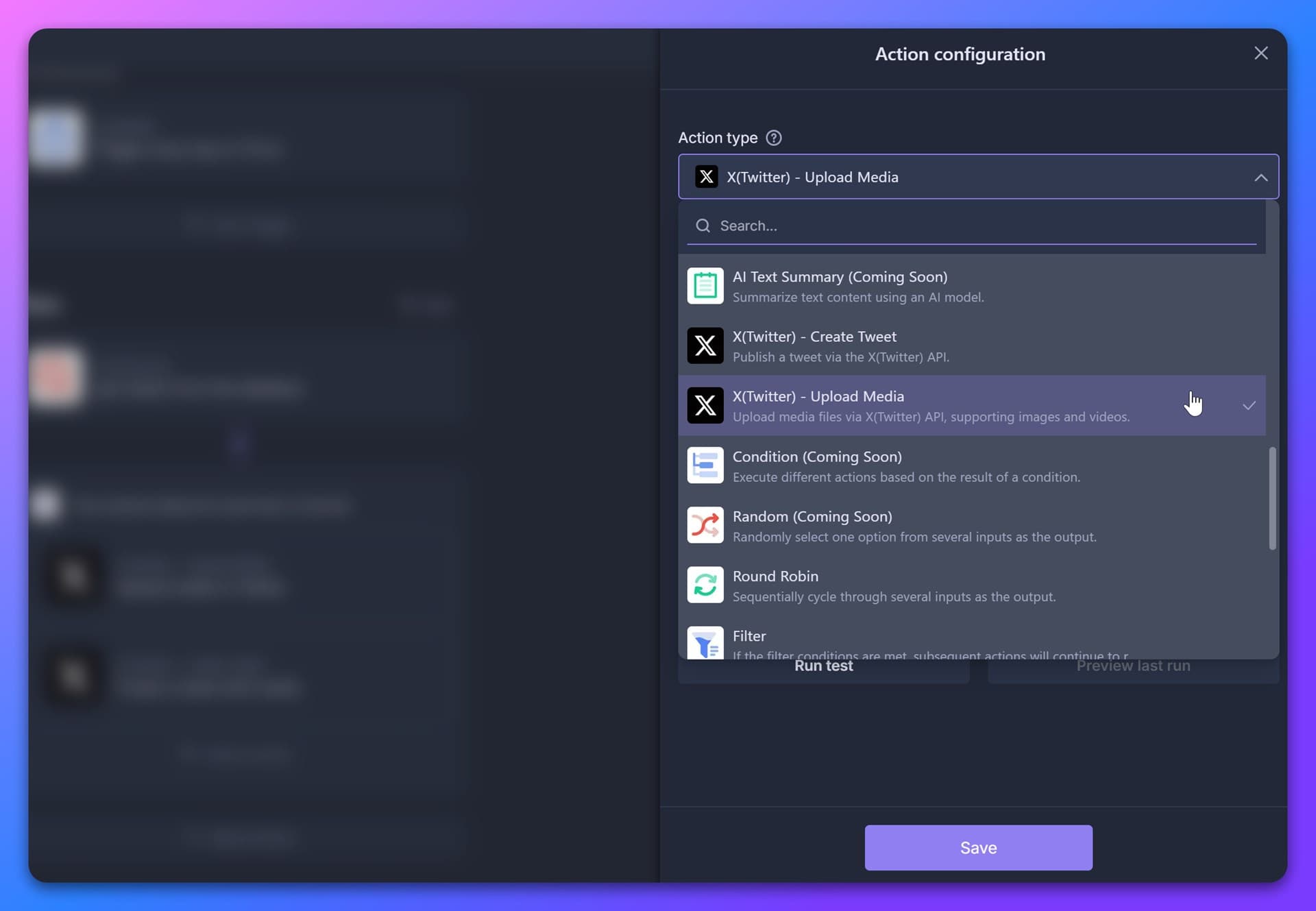
    Selecting the Upload Media action

2. Configure Action Fields

In the Action Configuration panel, you’ll see the following settings:

FieldDescription
NoteA short, human-readable description of this step. It appears on the automation canvas so you’ll know at a glance what the action does (e.g. “Upload header image”).
X Account IntegrationChoose the OAuth1.0a integration you previously set up. This tells Bika which X account to use when uploading media.
Media URLEnter a public URL to a media file or insert a variable referencing a file stored in your database. You can either paste a direct URL or use the / key to open the variable selector and choose an attachment field.

Media Upload Guidelines

  • GIF files: Maximum size is 15MB
  • Other image formats (e.g., JPG, PNG): Maximum size is 5MB
  • Videos: Twitter supports files up to 512MB, but due to upload latency and network reliability, we recommend keeping video size as small as possible for smoother performance.

Using the Media URL Field

  • Direct URL: Paste a publicly accessible link to an image, GIF, or video. Only one URL can be entered this way.
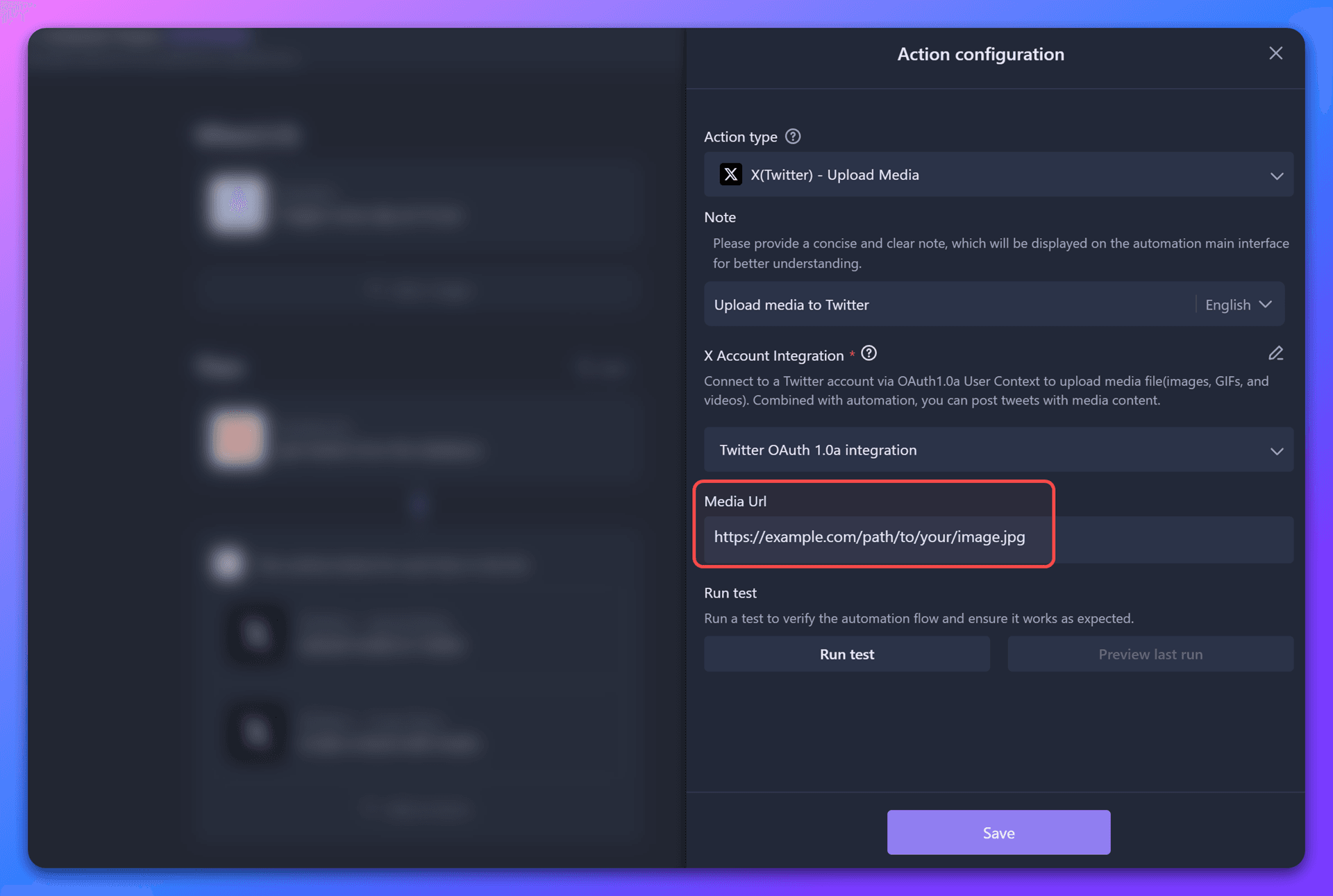
    Direct URL input example

  • Variable: Use a variable referencing an attachment field in a previous step (e.g., from a record in your database). Press / to open the variable selector.

    ℹ️ Note: A single tweet can include up to 4 media files. If your attachment field contains more than 4 files, only the first 4 will be uploaded.
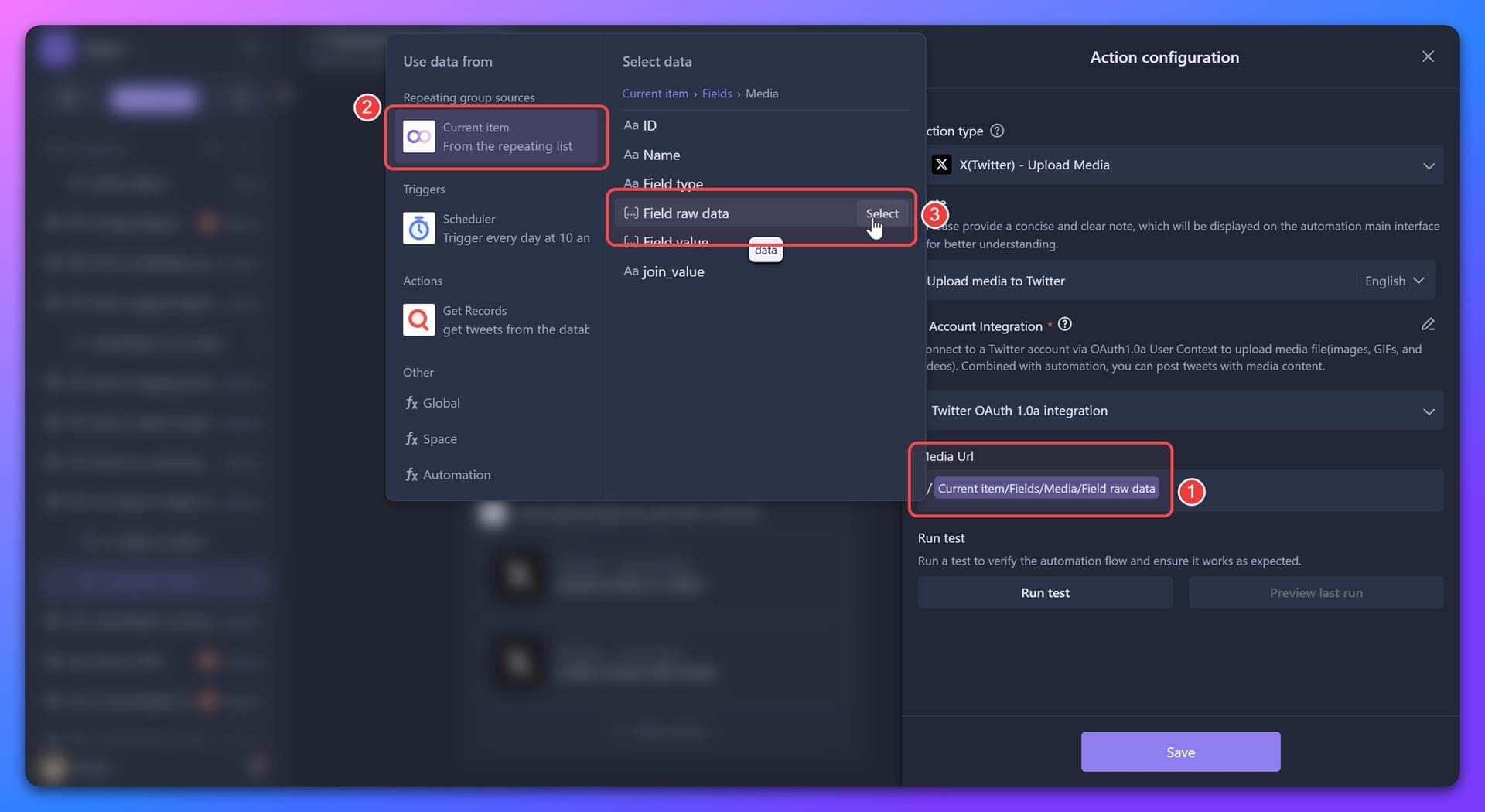
    Variable selection example

3. Run Test

After configuring the fields, click Run Test. This will validate your Twitter integration—though it won’t upload media yet, it ensures the connection works correctly.

🔔 Note: Be sure to run this test at least once before adding the Create Tweet action, as it depends on the mediaIds returned by this step.

4. Connect to “Create Tweet”

  1. Add a Create Tweet action after the Upload Media step.

  2. In the Create Tweet configuration panel, select the mediaIds variable returned by the Upload Media step to attach the media to your tweet.
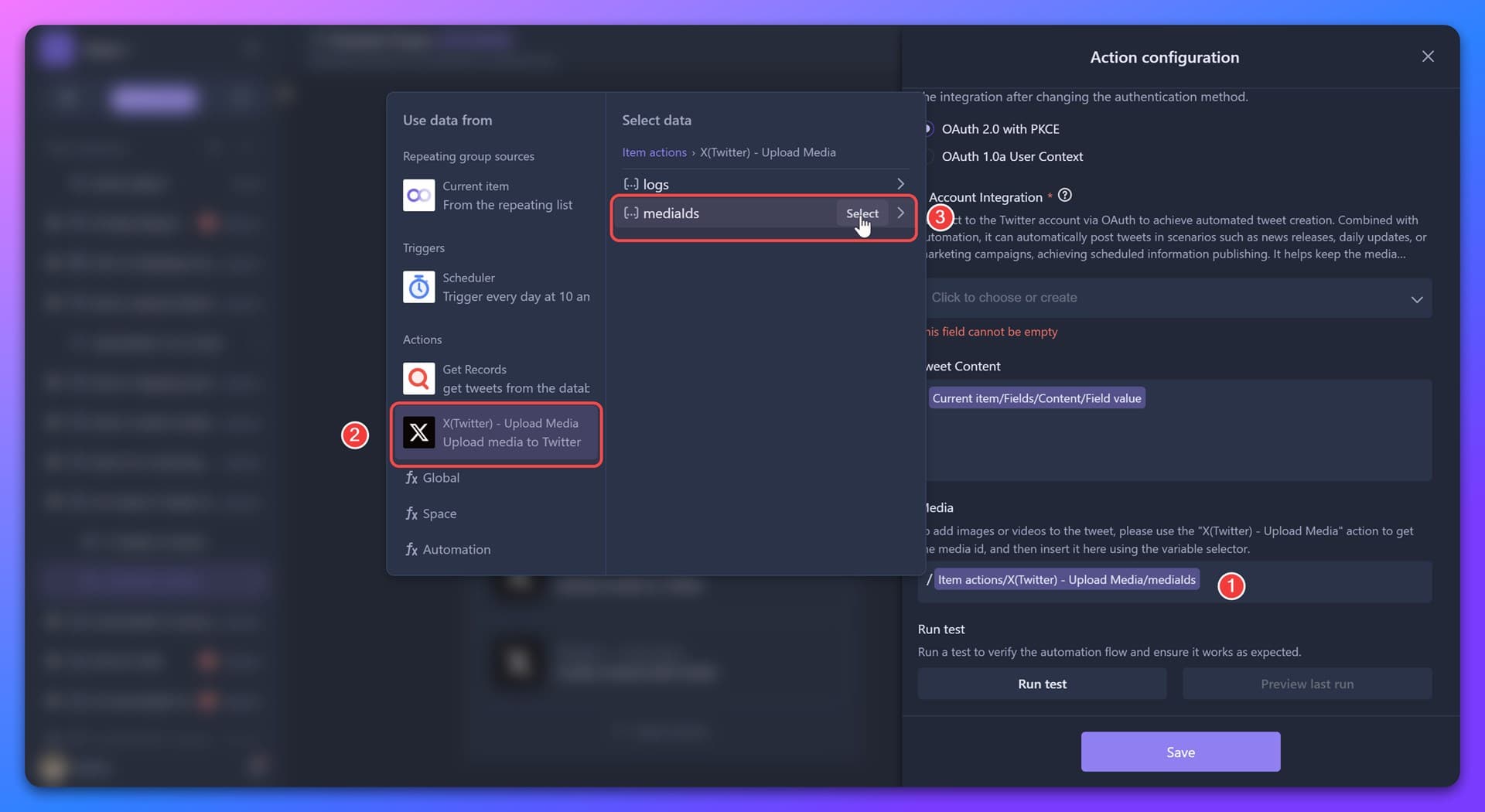
    Connecting media to Create Tweet action

  3. Save the Create Tweet action.

5. Run the Automation

Now, run your automation. The media will be uploaded to your X account, and the tweet will be published with the attached media.

🎯 Want to get started quickly?

Check out our ready-to-use template that combines Upload Media and Create Tweet actions:
👉 AI Automated X Tweets

Recommend AI Automation Templates

Digital Asset Management
Manage your digital files and creative assets efficiently with this Digital Asset Management template. Track project progress, assign tasks, monitor team workflow, and maintain an organized asset database. Easily collect new assets, ensure asset visibility, and streamline file tracking for design teams, project managers, and creative professionals.
Lead Notification Automation and AI-Driven Strategies
Use the Lead Notification Automation and AI-Driven Strategies template as a lead management template that connects your lead capture form and lead intake form to fully automated lead follow up. When a new client submits information, triggers and rules route the lead into your MQL database, AI generates follow‑up suggestions, and email plus Slack notifications are sent automatically. This reduces response times, supports consistent follow‑up from sales and support teams, and drives customer satisfaction improvement by ensuring every lead is acknowledged and handled promptly.
Employee onboarding
Employee onboarding
Streamline your new employee onboarding process with this customizable template featuring onboarding automation, pre-onboarding checklists, onboarding tasks, and automated reminders. Optimize HR workflows, ensure seamless integration of new hires, and track progress efficiently from document signing to training completion, enhancing productivity and employee experience.
Scheduled message reminders for DingTalk groups
Automate daily reminders and group announcements in DingTalk with this message automation template. Easily set up an automation task to send messages using a notification bot, including text, link, Markdown, ActionCard, and FeedCard formats. Improve communication efficiency, reduce manual work, and ensure every team member receives timely and accurate updates. Perfect for teams that rely on scheduled notifications to stay aligned and productive.
3-Day Outreach Email Campaign
Quickly launch a 3-day automated email outreach campaign with this ready-to-use email outreach template. Run an email drip sequence of automated welcome emails for new users to boost activation, retention, and early engagement. This workflow helps you send the right message on each of the first three days, pause the sequence when users reply, and avoid over-contacting them. Ideal for customer success teams, SaaS product managers, marketers, and startup founders who want a simple, automated way to guide new users into your product.
Automated Currency Data Retrieval (Python)
The Automated Currency Data Retrieval (Python) template runs a scheduled job to fetch specific currency rates every day and store them in a structured table, building clean historical exchange rate data over time. Use it for financial data automation that powers dashboards, alerts, and automated financial reporting, so finance teams, forex traders, accountants, and risk managers always have up-to-date FX data at hand. By automating data collection, you save time, reduce manual errors, and make better investment and risk decisions based on reliable exchange rate history.