Self-hosted Quick Start
Self-hosted Quick Start
Bika not only offers powerful features but also supports self-hosted deployment, providing users with greater flexibility and data security. Self-hosted deployment involves installing the software on your own servers rather than relying on cloud service providers.
Why self-hosted deployment?
Self-hosted deployment means installing the software on the user's own server instead of relying on a cloud service provider. This approach brings many benefits to users:
- Data Sovereignty: Users have complete control over their data, which is stored on local servers, ensuring that it cannot be accessed or misused by third parties.
- Security: Self-hosted deployment allows users to configure according to their own security policies, such as firewall settings and access controls, thus better protecting data security.
- Compliance: For industries with strict data privacy requirements (such as healthcare and finance), self-hosted deployment can meet compliance needs, avoiding risks associated with storing data on third-party platforms.
- Customization: Users can deeply customize the system based on their business needs without being constrained by cloud service provider limitations.
Steps for self-hosted Deployment
If you wish to use self-hosted deployment, follow these steps:
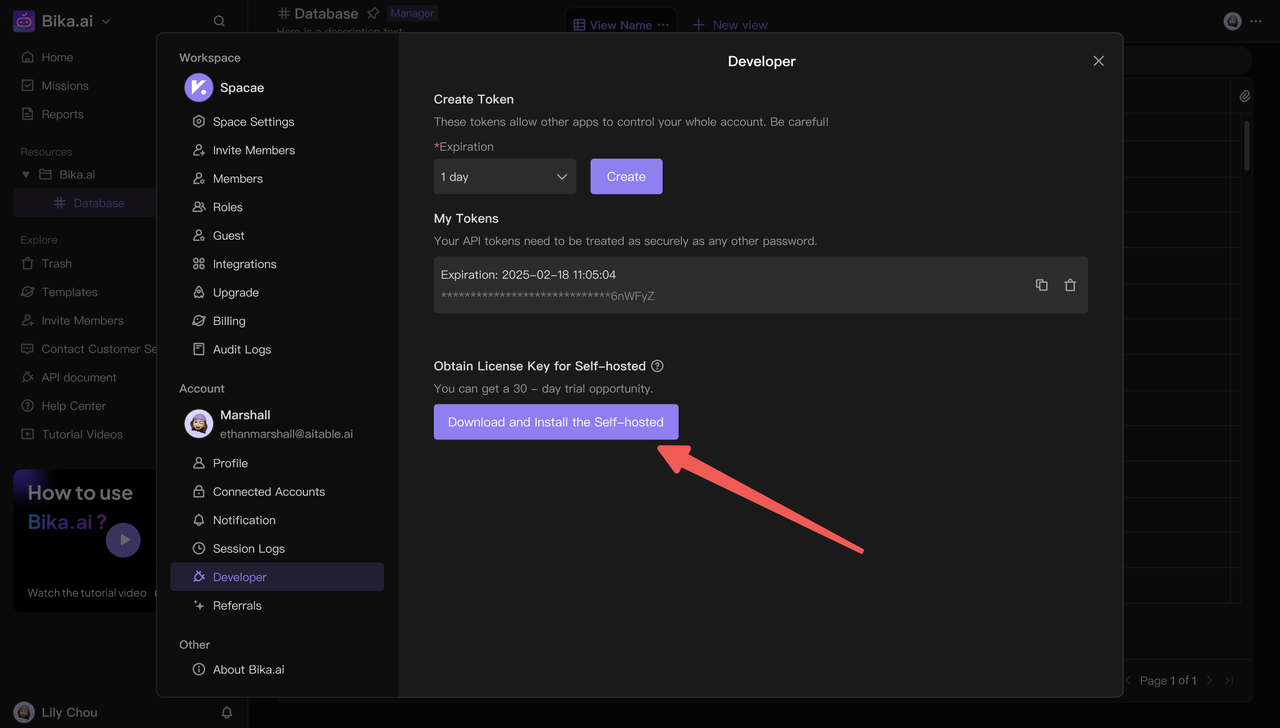
- Operate in Personal Settings:
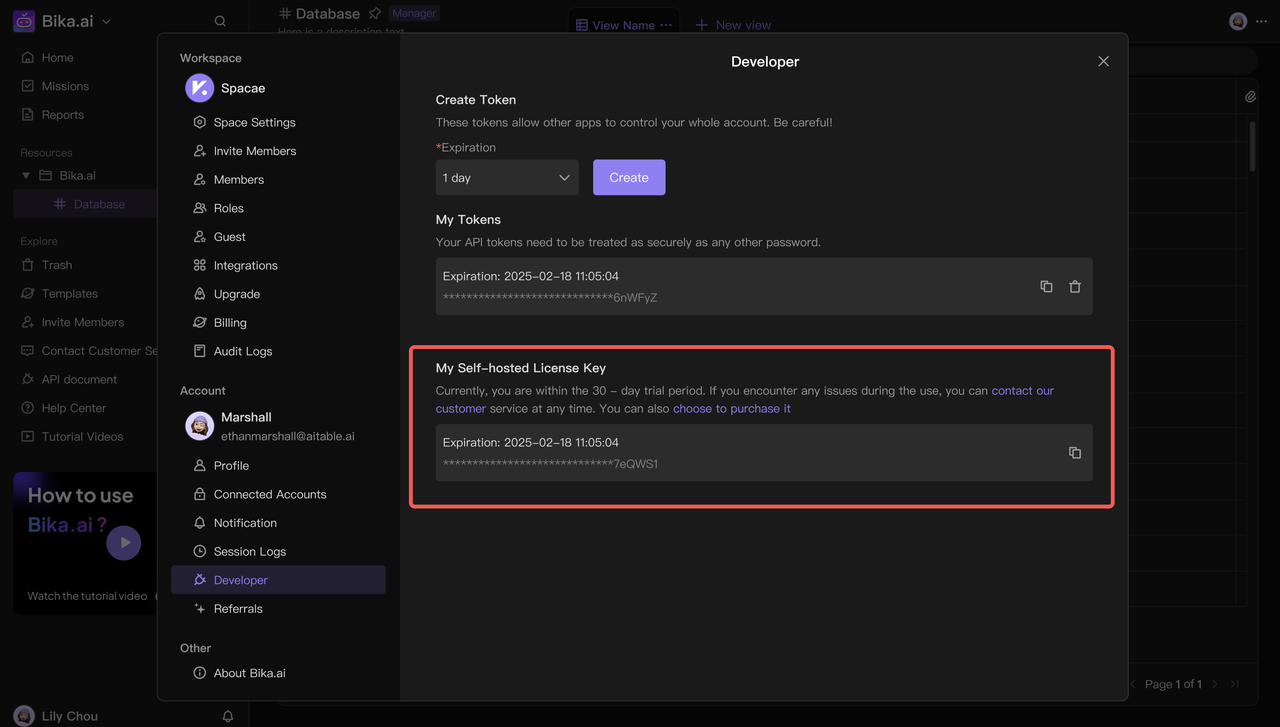
• Navigate to your "Personal Settings" page. Under the "Developer" tab, you will find a button labeled “Download Self-hosted Deployment Version.” Click this button to be redirected to the application page.
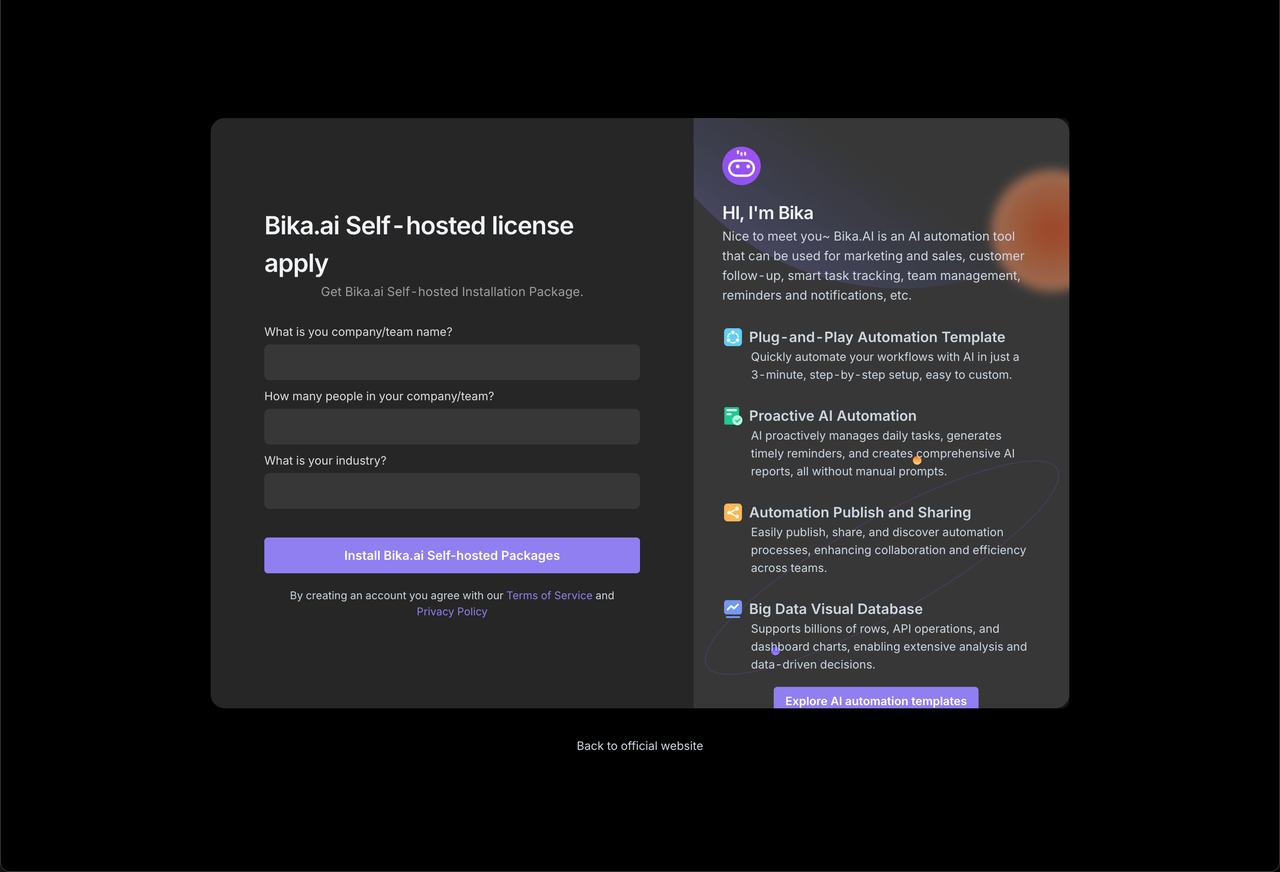
- Apply for Installation Guide and Package:
• On the application page https://bika.ai/license , fill out the form to apply. After submission, you will receive a quick start development guide, private deployment guide, and the installation package along with installation instructions.
- Complete Installation of the Self-hosted Deployment Version:
• Follow the installation guide to install the self-hosted deployment version. Upon first opening Bika.ai, the system will prompt you to enter a license key.
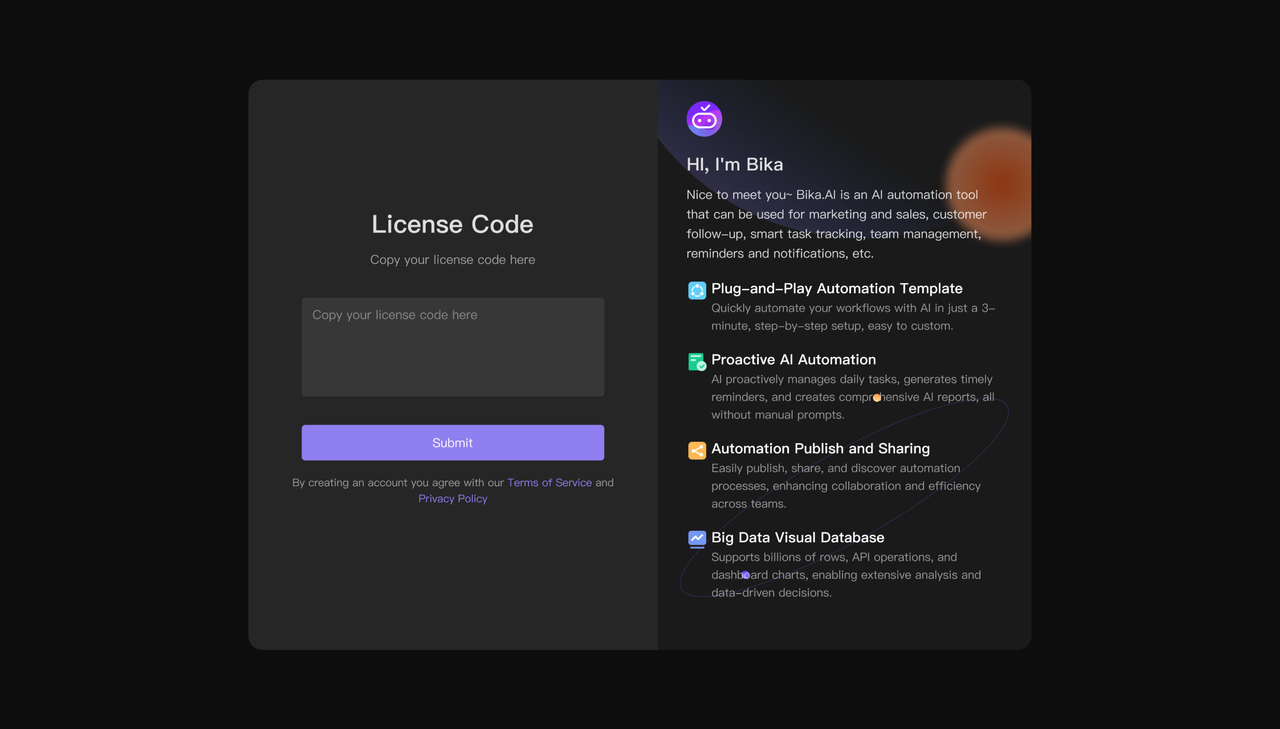
- Obtain and Enter License Key:
•Return to the "Personal Developer Interface." Below this interface, you will see a "License Key" button. After completing the installation, click this button and follow the prompts to input the corresponding key to proceed with subsequent operations.
- Start Your 30-Day Trial: You will receive a 30-day trial period for the license key. Input this key where prompted to activate the trial deployment.
- Purchase for Continued Use: After the trial period, if you wish to continue using the software, return to the page to purchase a full license, converting your trial deployment into an officially authorized version. Post-purchase, you will typically receive a new license key.
- Customer Support: If you encounter any issues during the process, you can click on the "Contact Customer Service" link next to the purple text for assistance.
Begin Your Self-hosted Deployment Journey with Bika
Bika’s self-hosted deployment offers a flexible, secure, and customizable solution for managing your data.
Now, please open the https://bika.ai/pricing page, click Self-hosted Installation, and start deploying your Bika instance.
Begin your personalized data management journey today!
Q & A
Q1: What AI features are supported in Bika's Self-hosted edition?A: Due to the diversity and polymorphism of large AI models, which involve considerable non-standard configurations and debugging, Bika's self-hosted edition currently only provides certain large model actions in the automation module. For example, it supports text generation capabilities from OpenAI or DeepSeek. Other AI features available in the SaaS edition are not included in the self-hosted edition.
Recommend AI Automation Templates