
Google Analytics Skillset
The Google Analytics Skillset connects to your Google Analytics account, allowing the AI agent to access your website data and generate analysis reports.
Google Analytics Skillset Guide
Table of Contents
Overview
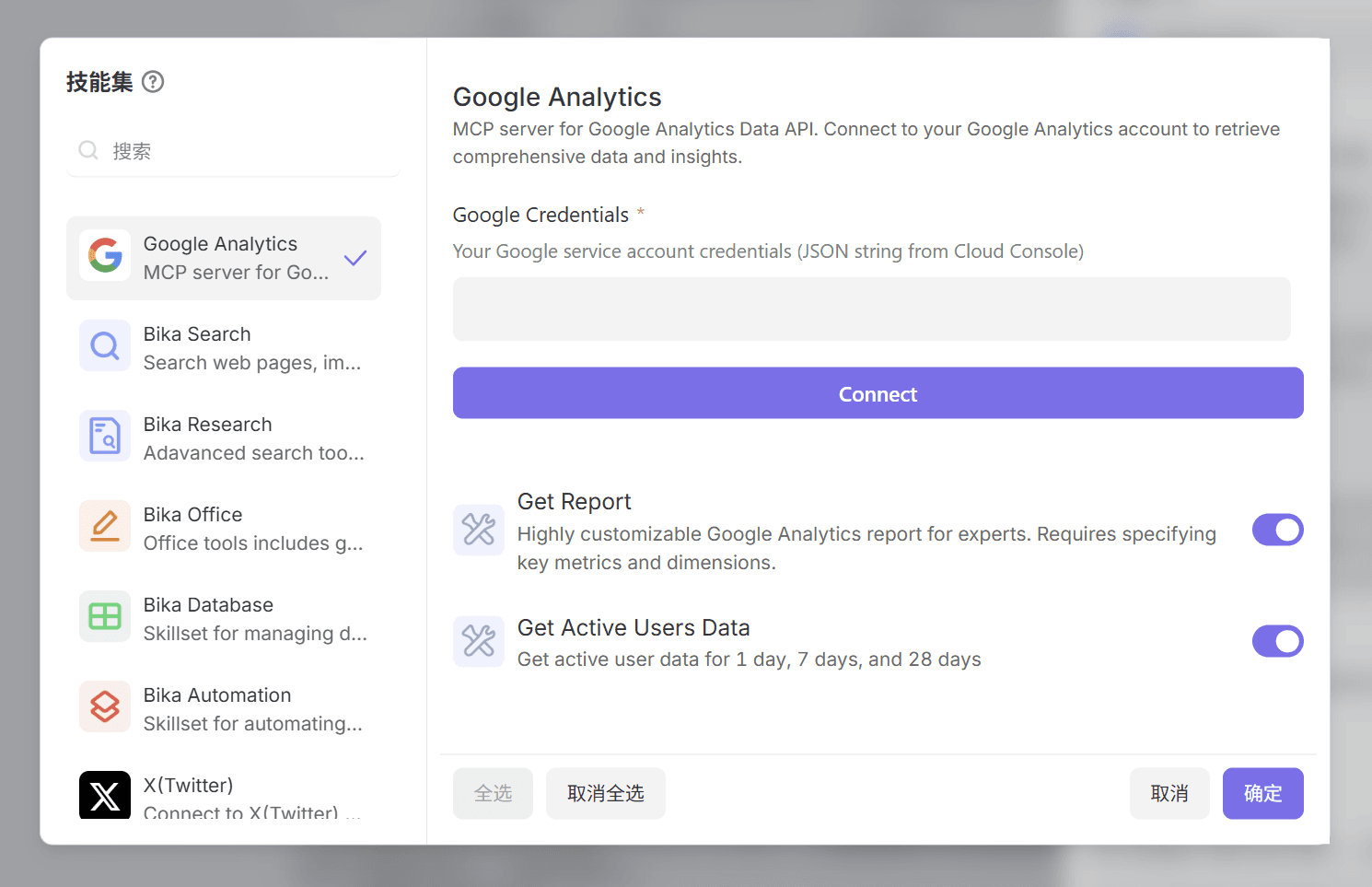
The Google Analytics Skillset is a collection of tools connected to your Google Analytics account. By enabling this skillset, the AI agent can access your website data through Google Analytics and generate analytical reports, making it easier for you to understand your website behavior.
The current skillset includes the following skills:
- Get Custom Report: Customizable Google Analytics reports where you can specify metrics and dimensions to get custom Google Analytics reports (metrics and dimensions can be specified)
- Parameter Description:
propertyId(required): Google Analytics Property ID (e.g.:42XXXXX01)startDate(required): Start date (format: YYYY-MM-DD)endDate(required): End date (format: YYYY-MM-DD)dimensions(optional): Query dimensions (e.g.: country, city, pagePath, sessionSource)metrics(required): Query metrics (e.g.: activeUsers, active1DayUsers, active7DayUsers, active28DayUsers)limit(optional): Limit the number of results, default is 50
- Parameter Description:
📌 Tip: For more dimensions and metrics, please refer to the Google Analytics API documentation.
- Get Active Users Data: Get active user data (1 day, 7 days, 28 days)
- Parameter Description:
propertyId(required): Google Analytics Property ID (e.g.:42XXXXX01)startDate(required): Start date (format: YYYY-MM-DD)endDate(required): End date (format: YYYY-MM-DD)limit(optional): Limit the number of results, default is 50
- Parameter Description:
Setup
The Google Analytics Skillset relies on Google Cloud service account credentials (Google Credentials). Please follow the steps below to configure:
Step 1: Get Google Analytics Credentials
-
Visit the Google Cloud Console and sign in or create an account.
-
Create a new project or select an existing one.
-
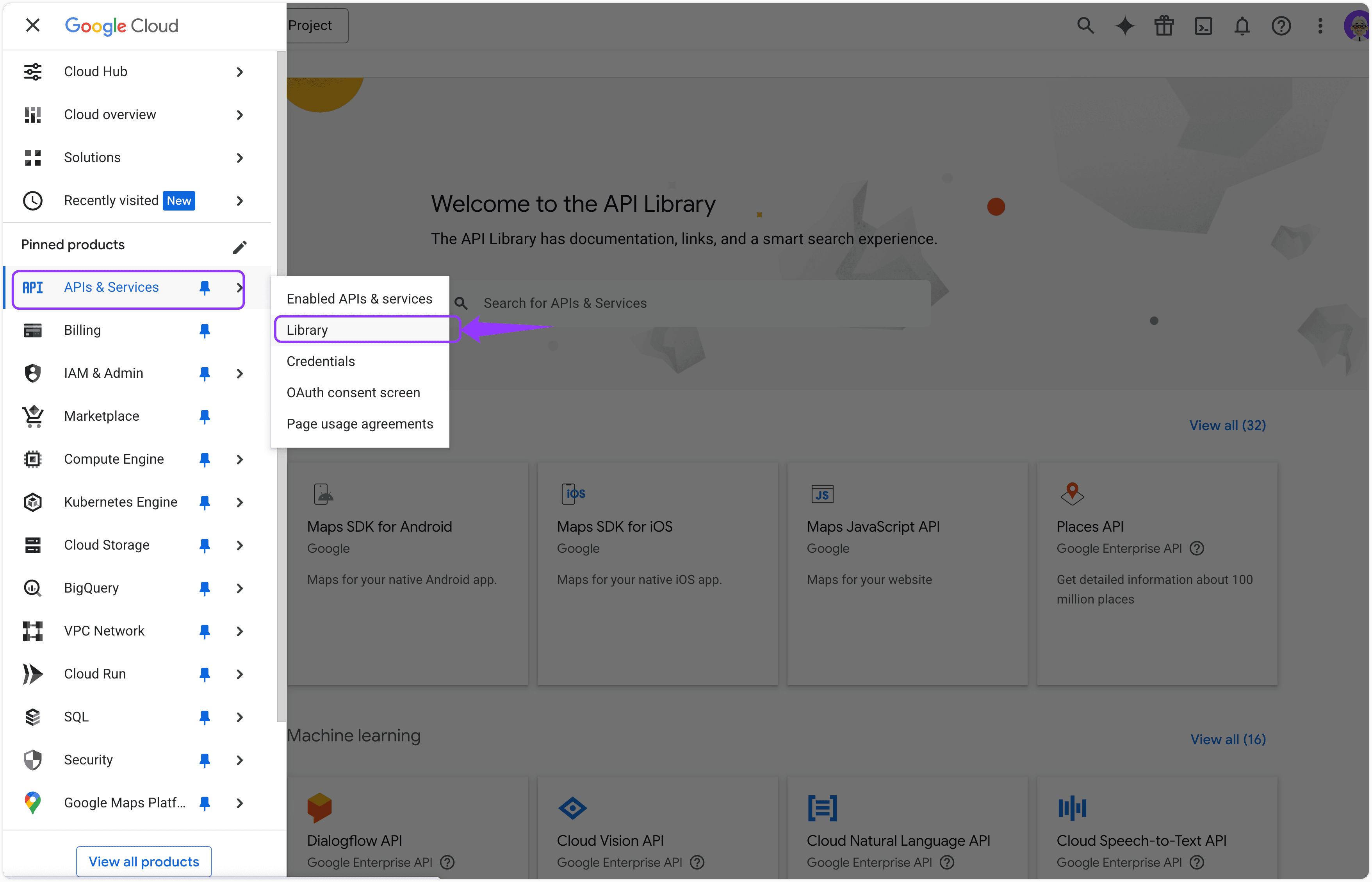
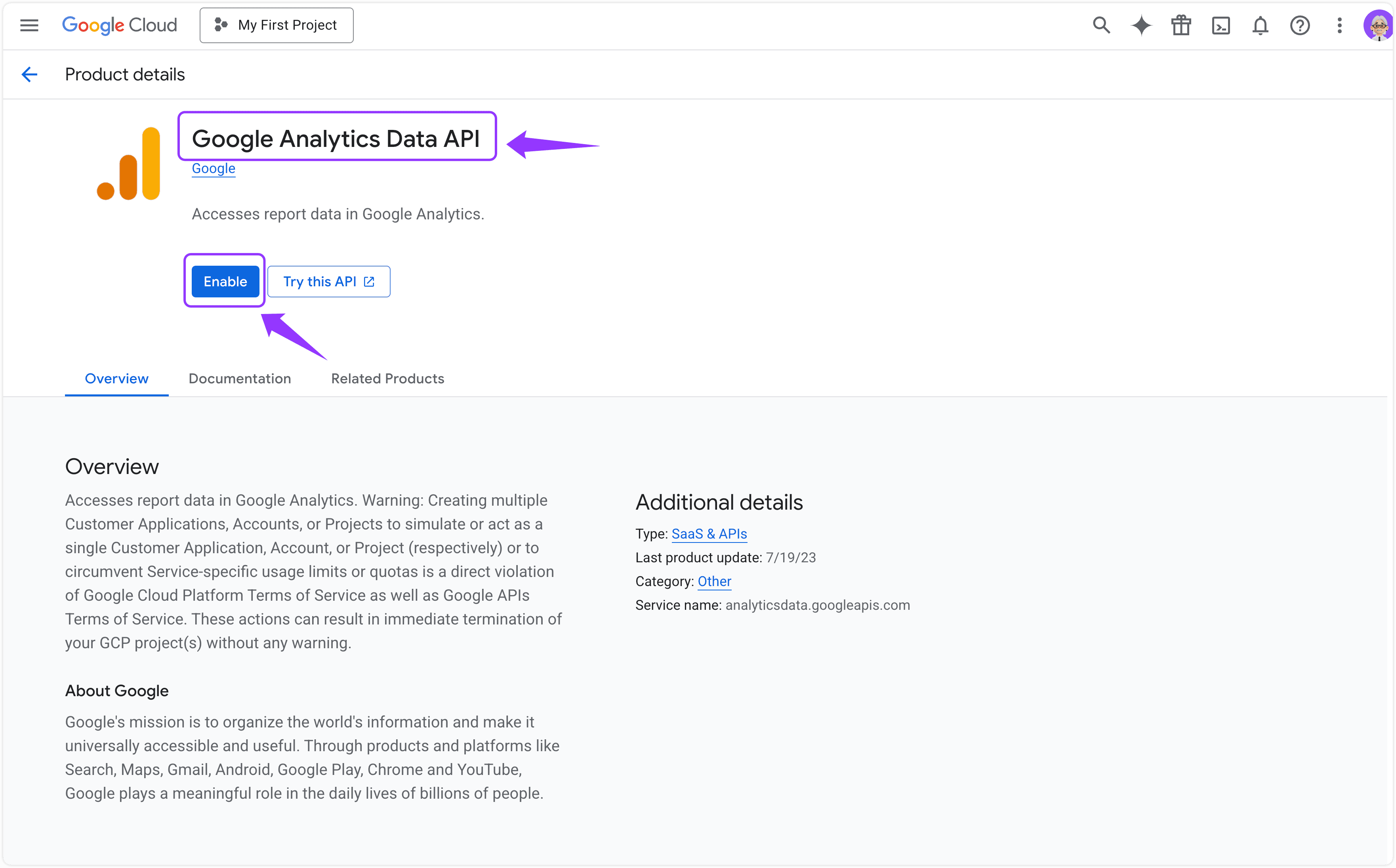
Enable the Analytics Data API:
- In the Google Cloud Console, go to "APIs & Services" > "Library"
- Search for "Analytics Data API"
- Click it and press "Enable"
-
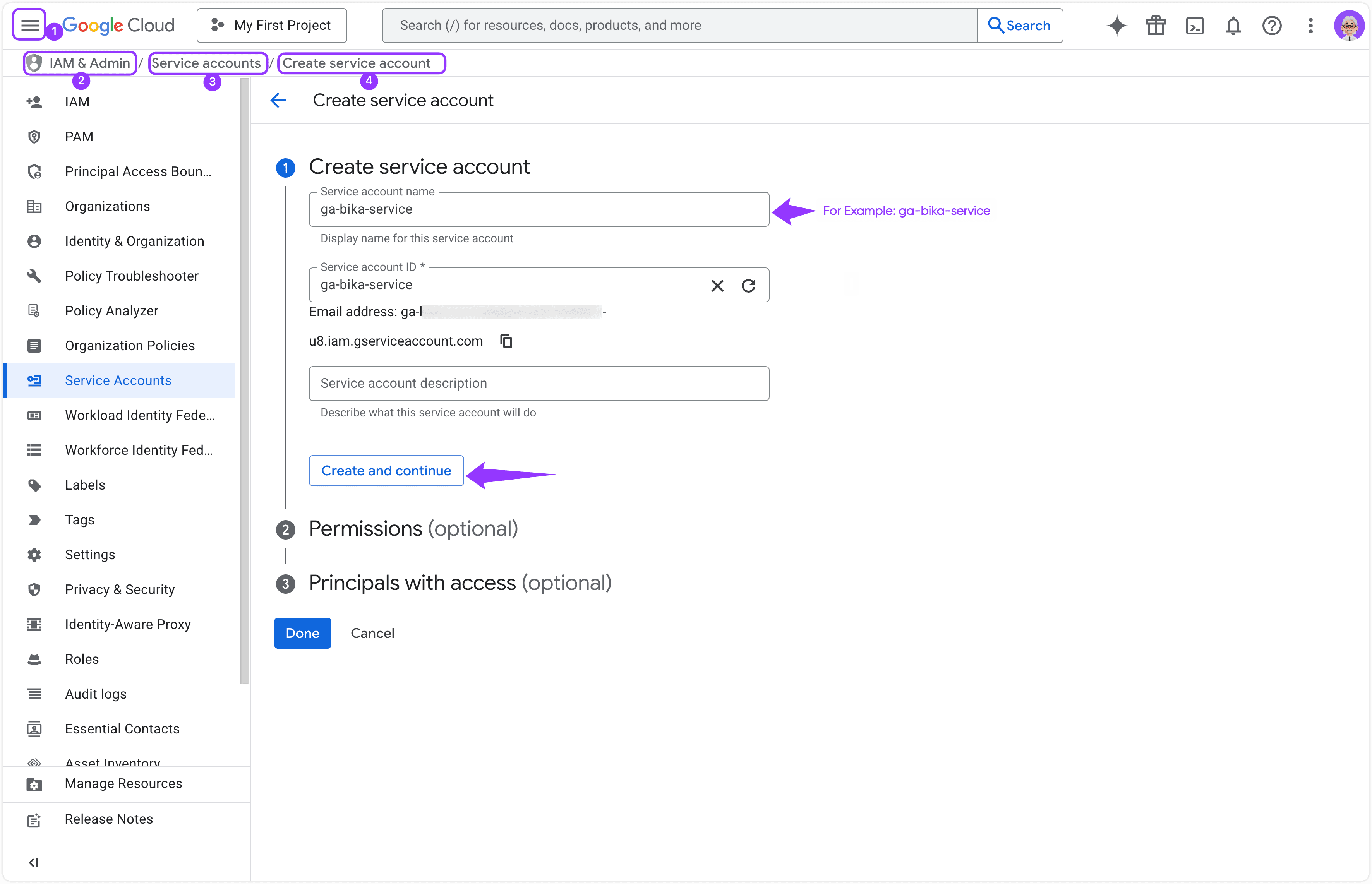
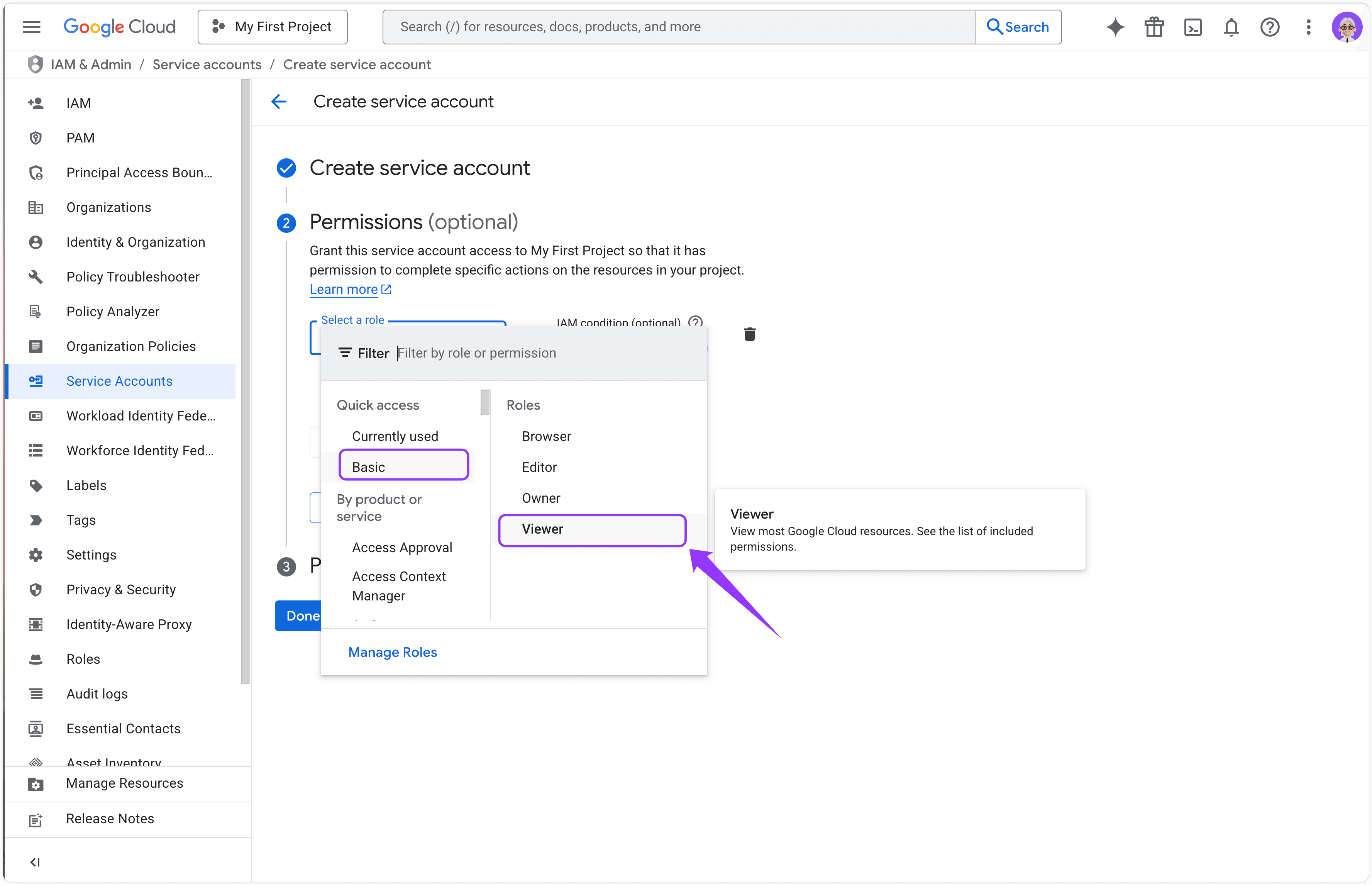
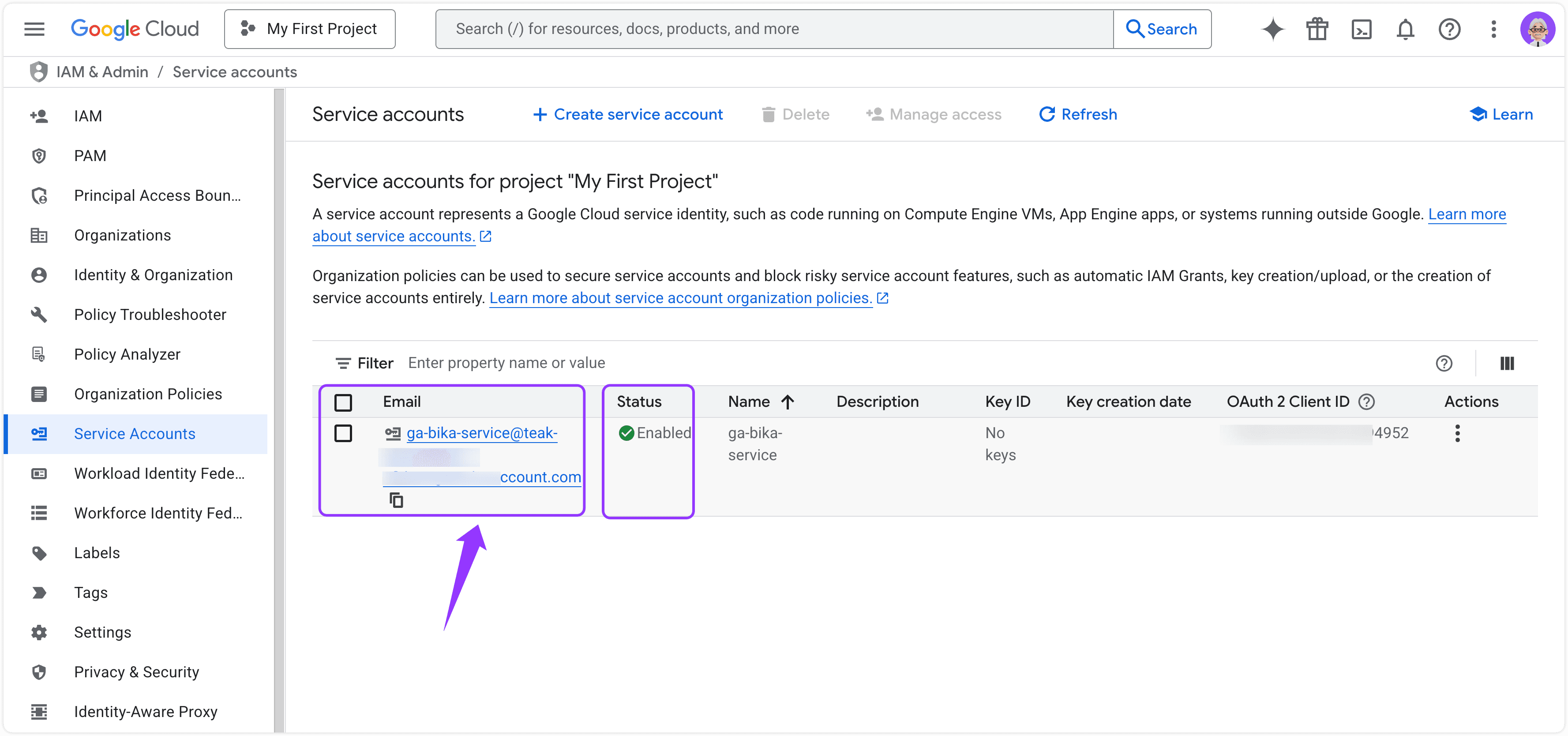
Create a service account:
- Go to "IAM & Admin" > "Service Accounts"
- Click "Create Service Account"
- Give it a name, such as "bika-analytics", then click "Create"
- Assign the "Viewer" role, click "Continue" then "Done"
-
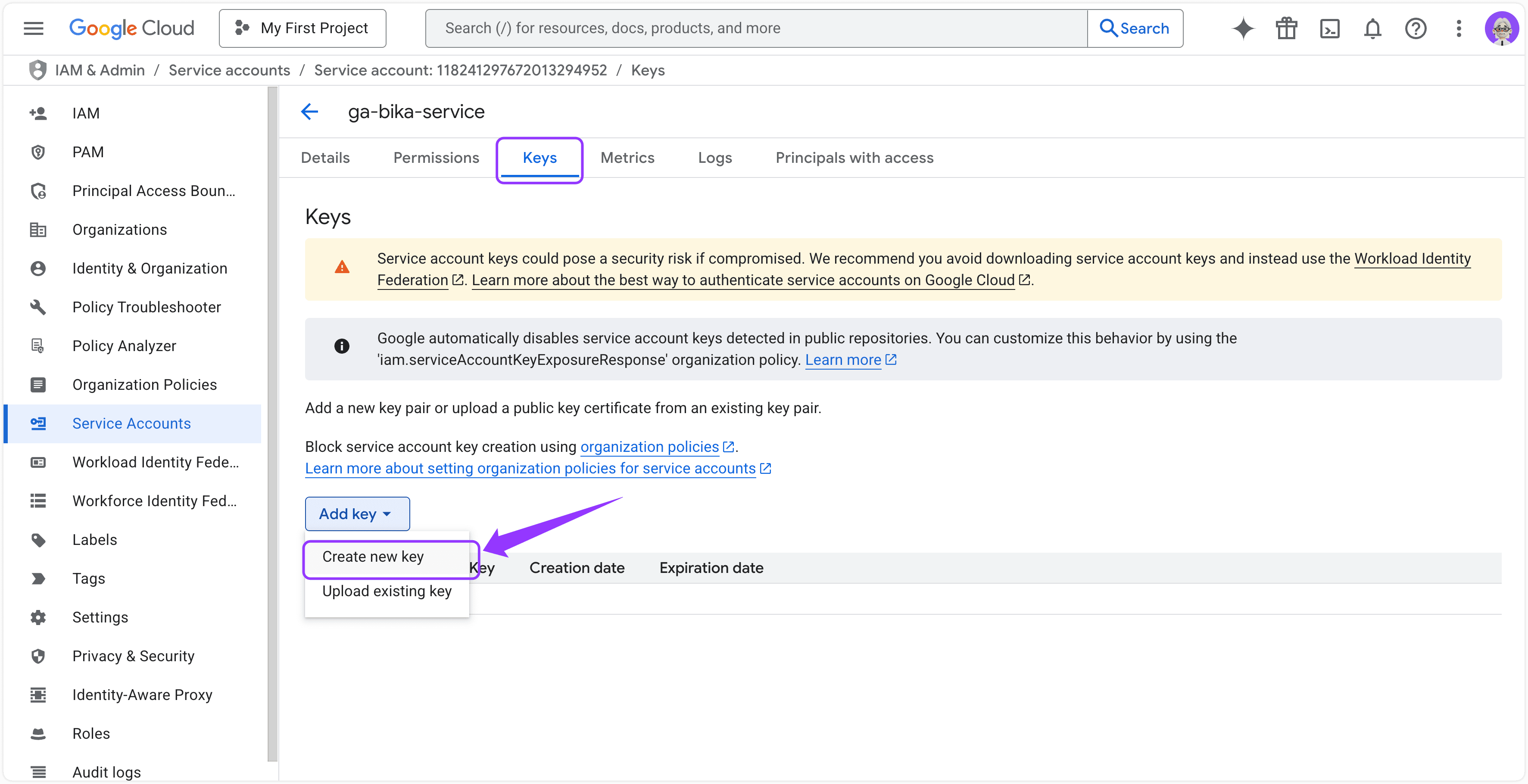
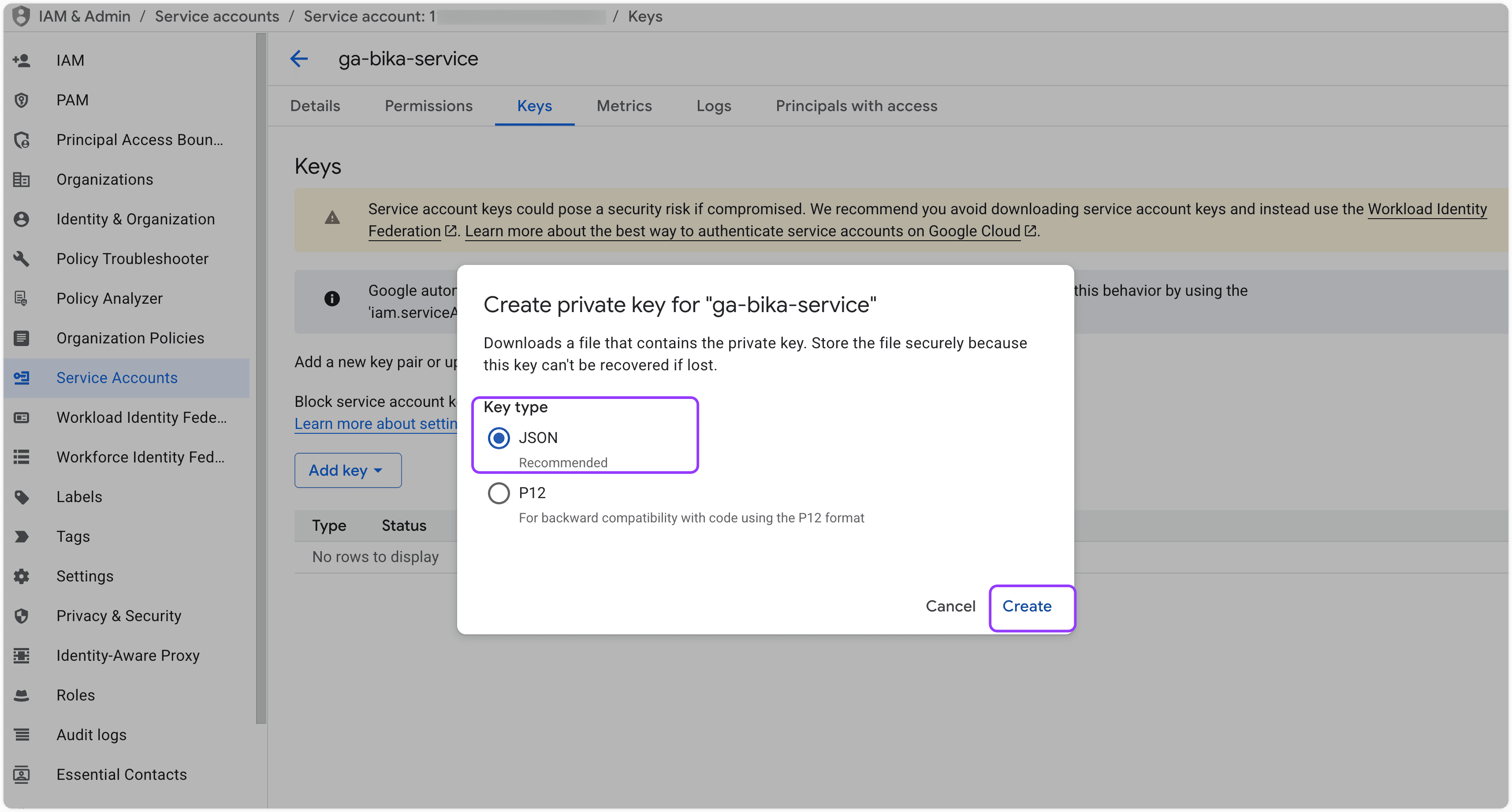
Create and download credentials:
- Click your new service account
- Go to the "Keys" tab
- Click "Add Key" > "Create new key"
- Choose "JSON" and click "Create"
- Save the downloaded JSON file securely
-
Grant permissions in Google Analytics:
- Go to Google Analytics
- Click "Admin" (gear icon)
- Select the account containing the property whose data you want to access
- Under the "Account" section, select "Account Access Management"
- Click the "+" button and add the service account email (from the
client_emailfield in the JSON file) - Assign "Viewer" permissions
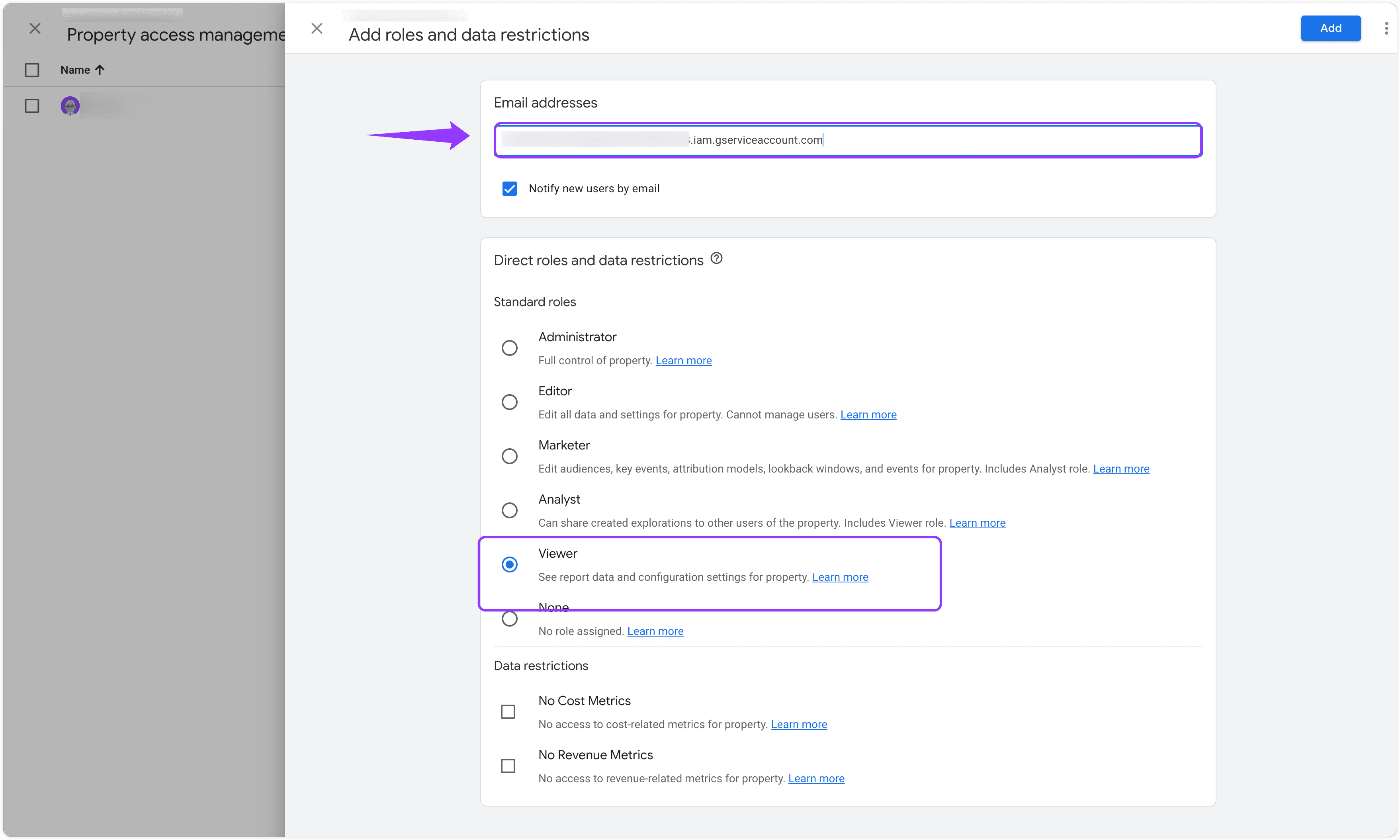
-
Get your Google Analytics Property ID:
- In Google Analytics, click "Admin" (gear icon)
- Select "Property" > "Property details"
- Copy the "PROPERTY ID:
42XXXXX01" for use later in conversations with AI or in prompts (see step 2 for example).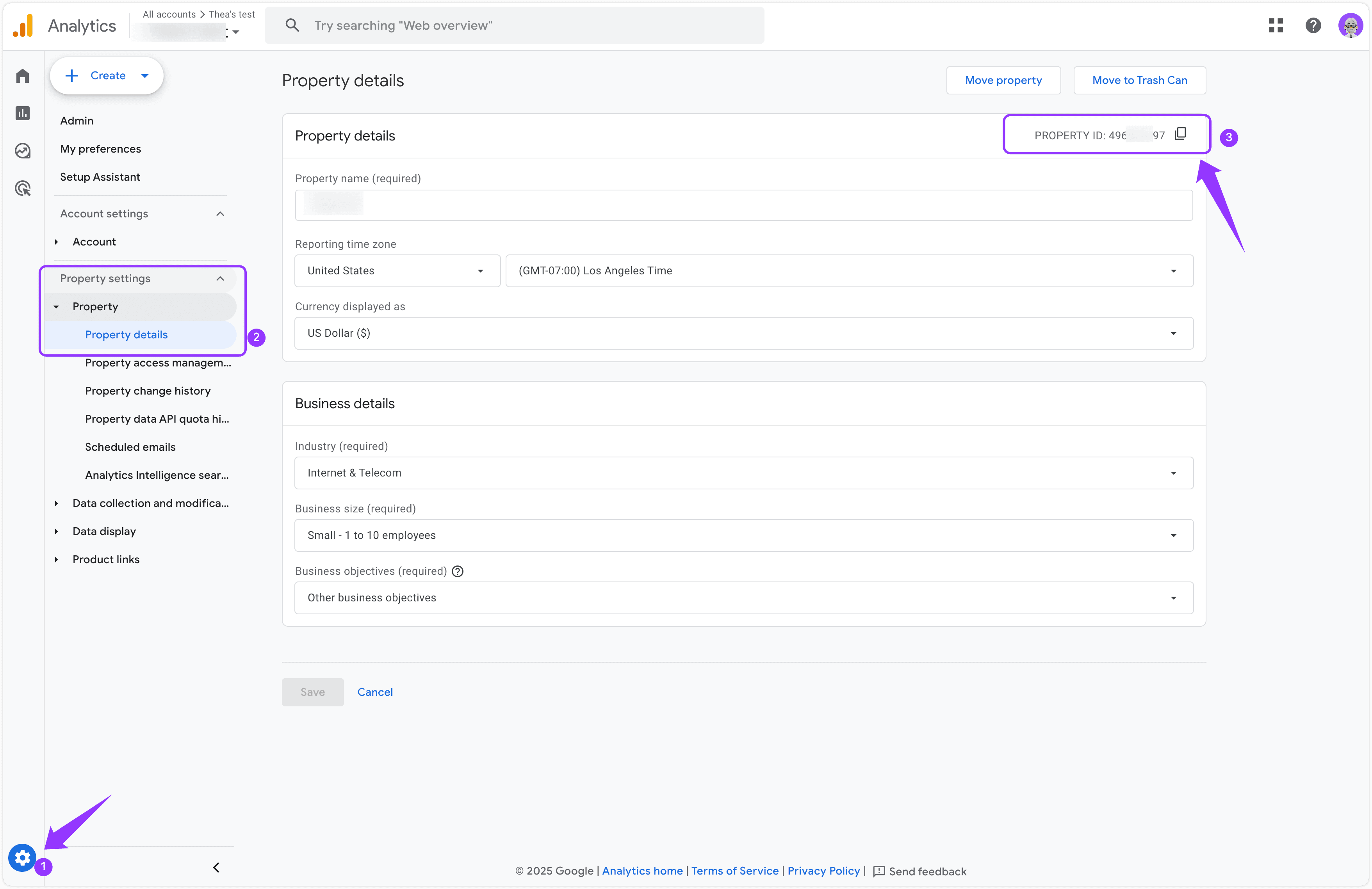
Step 2: Configure the Skillset
- Return to the Google Analytics skillset configuration page in Bika.
- Paste the entire JSON credential content into the Google Credentials field.
- Click Connect to complete the credential configuration.
- Enter the Property ID in the System Prompt, or enter the Property ID directly during conversation.
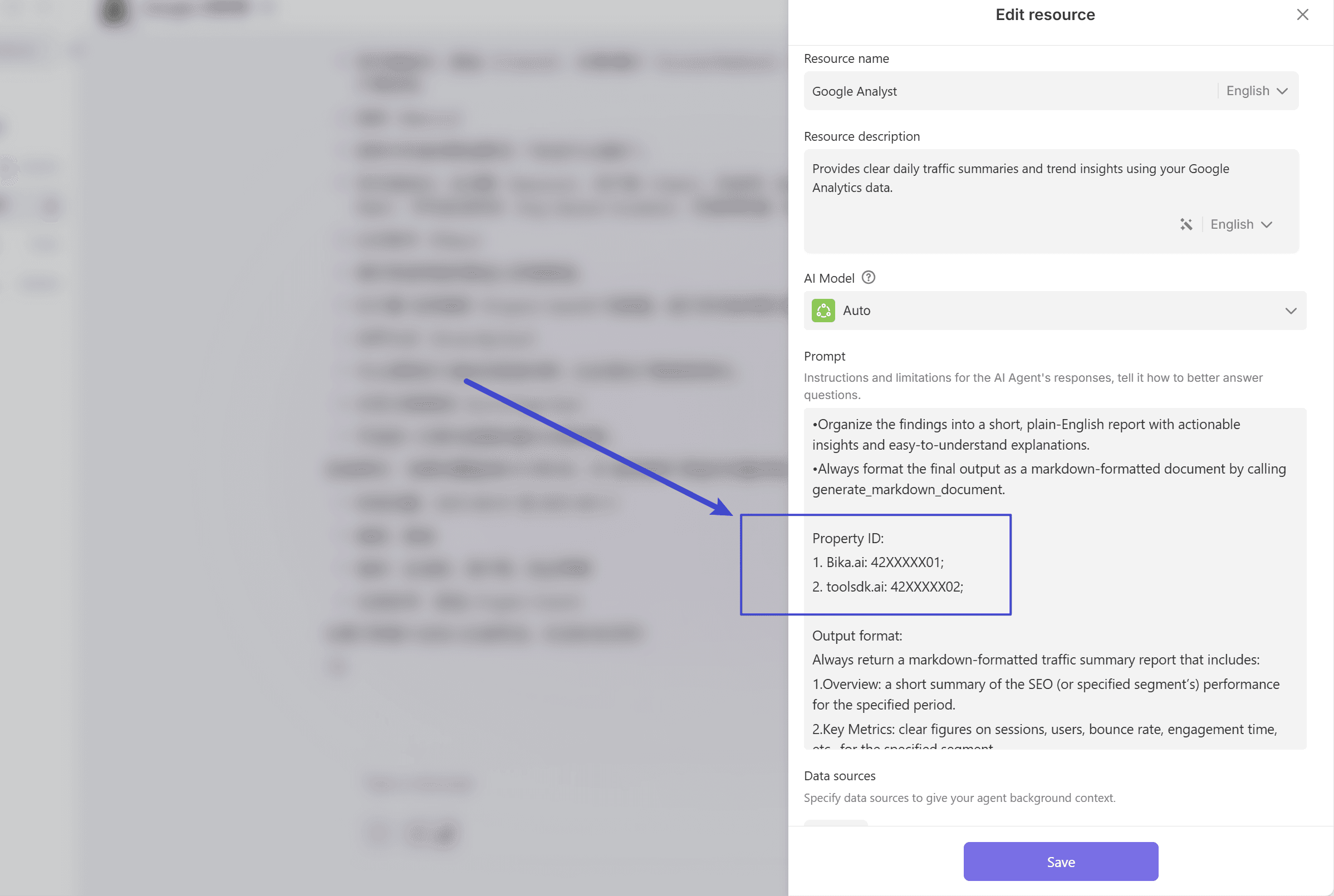
⚠️ If the setup process feels complex, you can also refer to the Google Analytics Agent template documentation for more detailed operation examples.
Step 3: Enable Required Skills
- On the skillset configuration page, enable the required functions via toggle switches
- Multiple skills can be enabled simultaneously
- Click Save to take effect
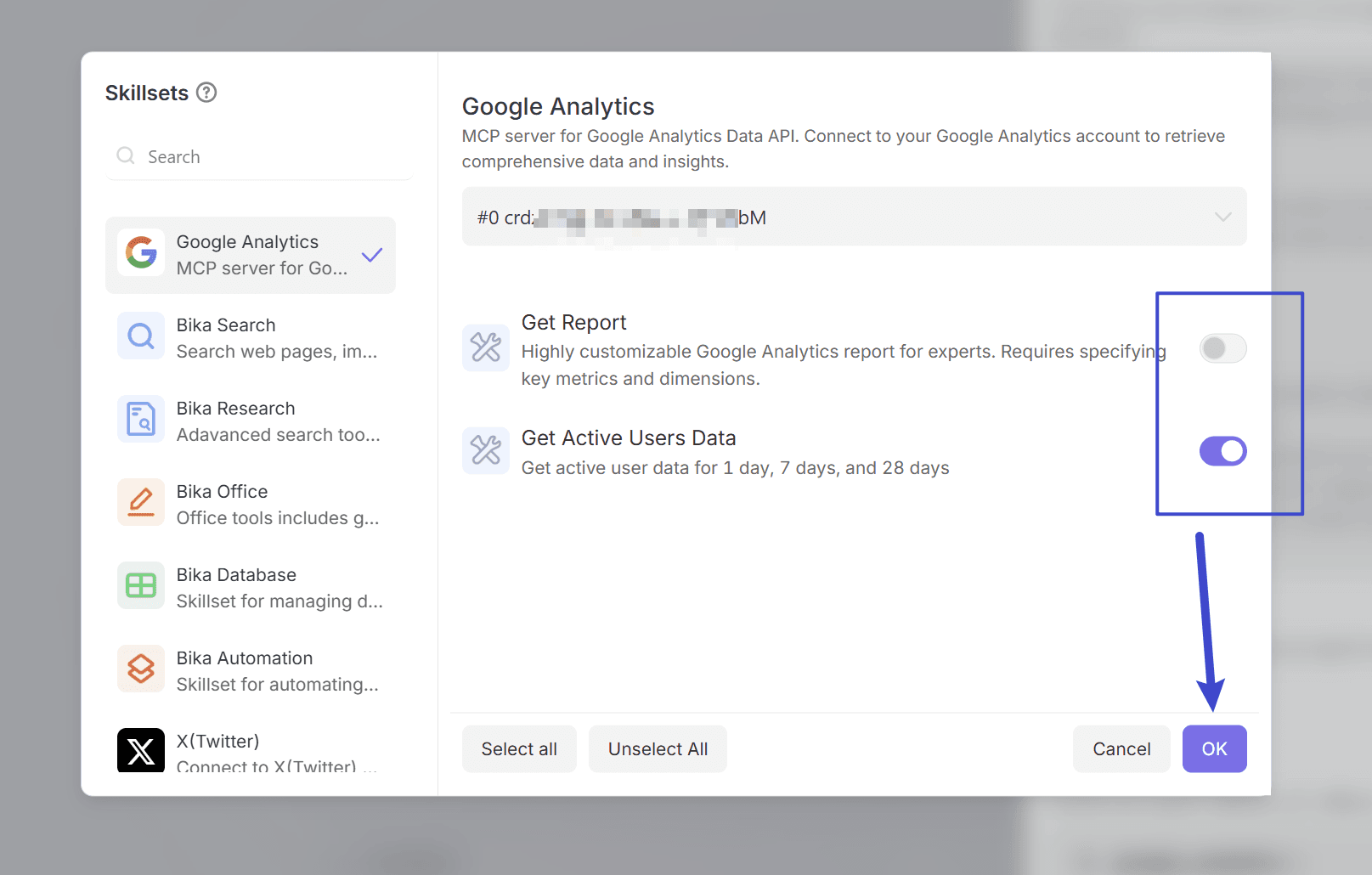
Usage Examples
1) Get Report
Have the AI generate a custom analytics report:
Example prompt: "View total users"
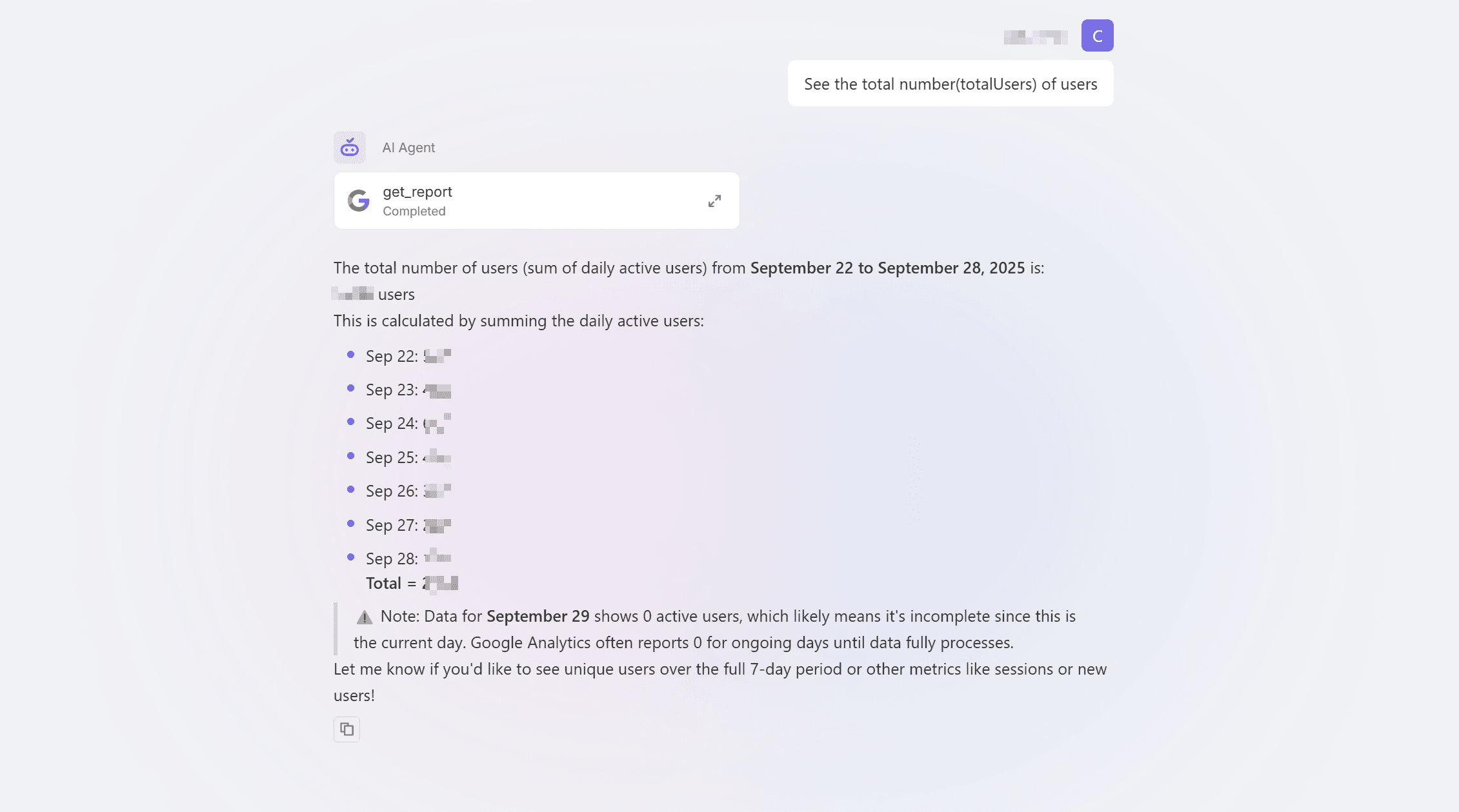 metrics:
 totalUsers is the total number of users. Telling the AI directly can avoid potential errors, which depends on the LLM's understanding of Google Analytics.
Example prompt: "Analyze page views and sessions by country for the past month"
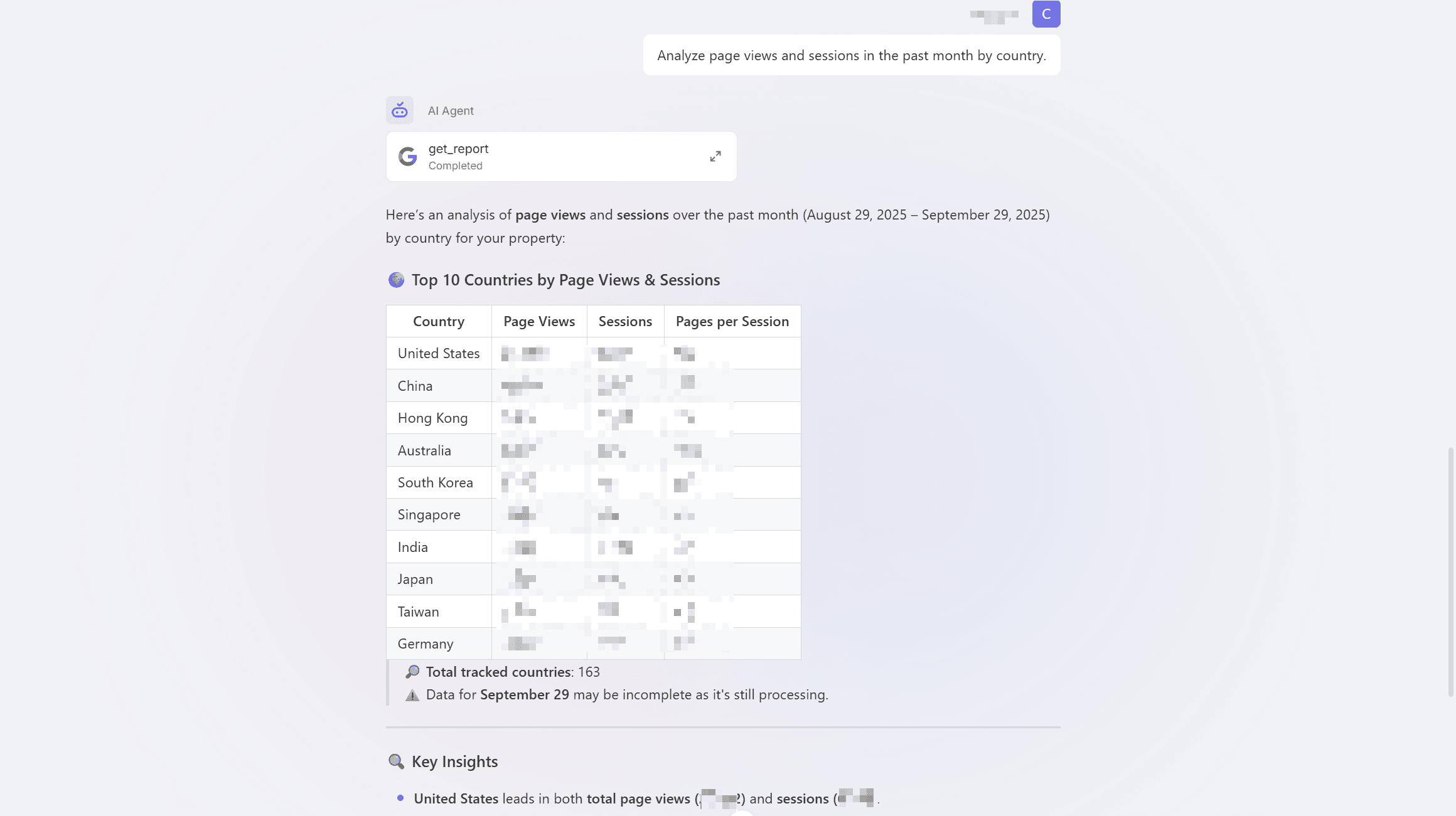 metrics:
 screenPageViews, sessions
📌 Tips:
- Property ID: Unique identifier, such as
42XXXXX01, can be specified in the prompt. - dimensions: e.g.,
country,date,city,adUnitName. - metrics: e.g.,
sessions,screenPageViews,activeUsers,totalUsers. - For more dimensions and metrics, please refer to the Google Analytics API documentation.
2) Get Active Users Data
Have the AI fetch user activity metrics:
Example prompt: "Show active user count"
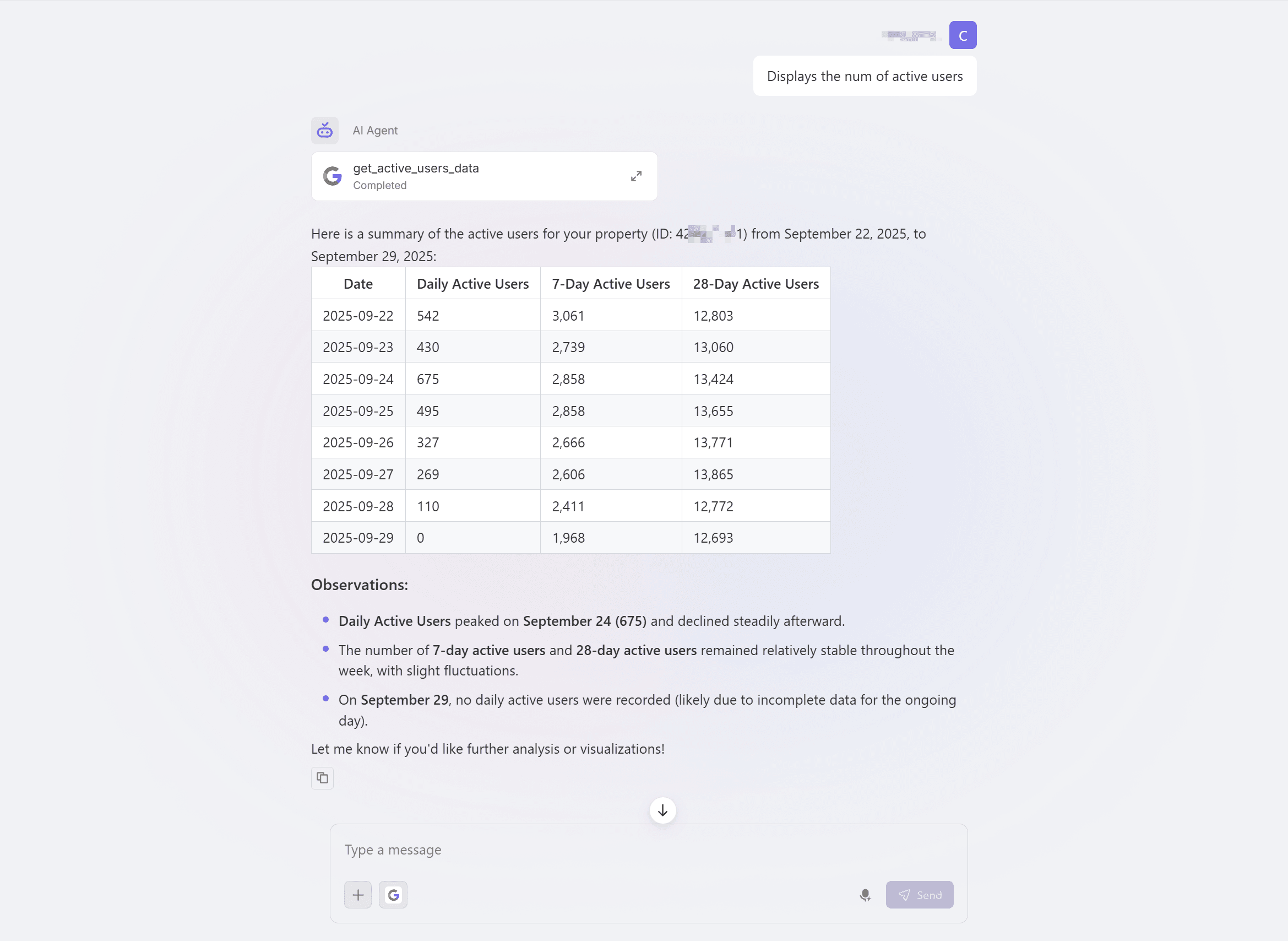
Q&A
Q: What should I do if the connection fails? A: Check if the JSON was pasted completely, if extra symbols were added, or if the service account email has been configured with permissions.
Q: What should I do if the function is unavailable? A: Confirm that the corresponding skill has been enabled and saved on the configuration page.
Q: What should I do if the call is restricted? A: Google Analytics API has rate limits. Too many requests may trigger restrictions; try again later.
Recommend AI Automation Templates






AI Agent
The AI Agent in Bika.ai comes with powerful capabilities to handle complex tasks, thanks to a wide range of Skillsets designed for real-world use.
Stock Market Skillset
The Stock Market Skillset is a comprehensive stock market analysis toolkit based on the Alpha Vantage API. Once enabled, the AI agent can retrieve real-time quotes, historical data, financial statements, market news, insider transactions, and technical indicators to support investment research and financial analysis.