Weekly meeting reminder (WeCom)

Weekly meeting reminder (WeCom)

author
Bika.ai
date
1 min read

Automate your weekly meeting reminders with WeCom using Bika.ai. This template ensures team engagement, seamless corporate communication, and office productivity by sending timely alerts with meeting time, location, and agenda. Improve participation, reduce managerial workload, and streamline planning with automated office alert and meeting planning tools.

Weekly meeting reminder (WeCom)
Automate your weekly meeting reminders with WeCom using Bika.ai. This template ensures team engagement, seamless corporate communication, and office productivity by sending timely alerts with meeting time, location, and agenda. Improve participation, reduce managerial workload, and streamline planning with automated office alert and meeting planning tools.

Overview

💡 Why Use the Weekly Meeting Reminder (WeCom) Template

Manually sending reminders is time-consuming and prone to omissions. Using automated reminders can:

  • Improve team preparedness and participation
  • Reduce the workload of managers
  • Ensure all members receive important information in a timely manner

👉 How the Template Works

This template contains an automation task.

  • Every Monday morning, the system automatically sends a meeting reminder message to the WeCom group, including the meeting time, agenda, etc. Each field and to-do item can be customized to meet the specific needs of the team.

🎯 Steps to Use

1. Install the Template

Install this template into your Bika Space.

2. Configure the WeCom Group Robot

Add a group robot to the WeCom group to send reminder messages and copy the Webhook address of the group robot.
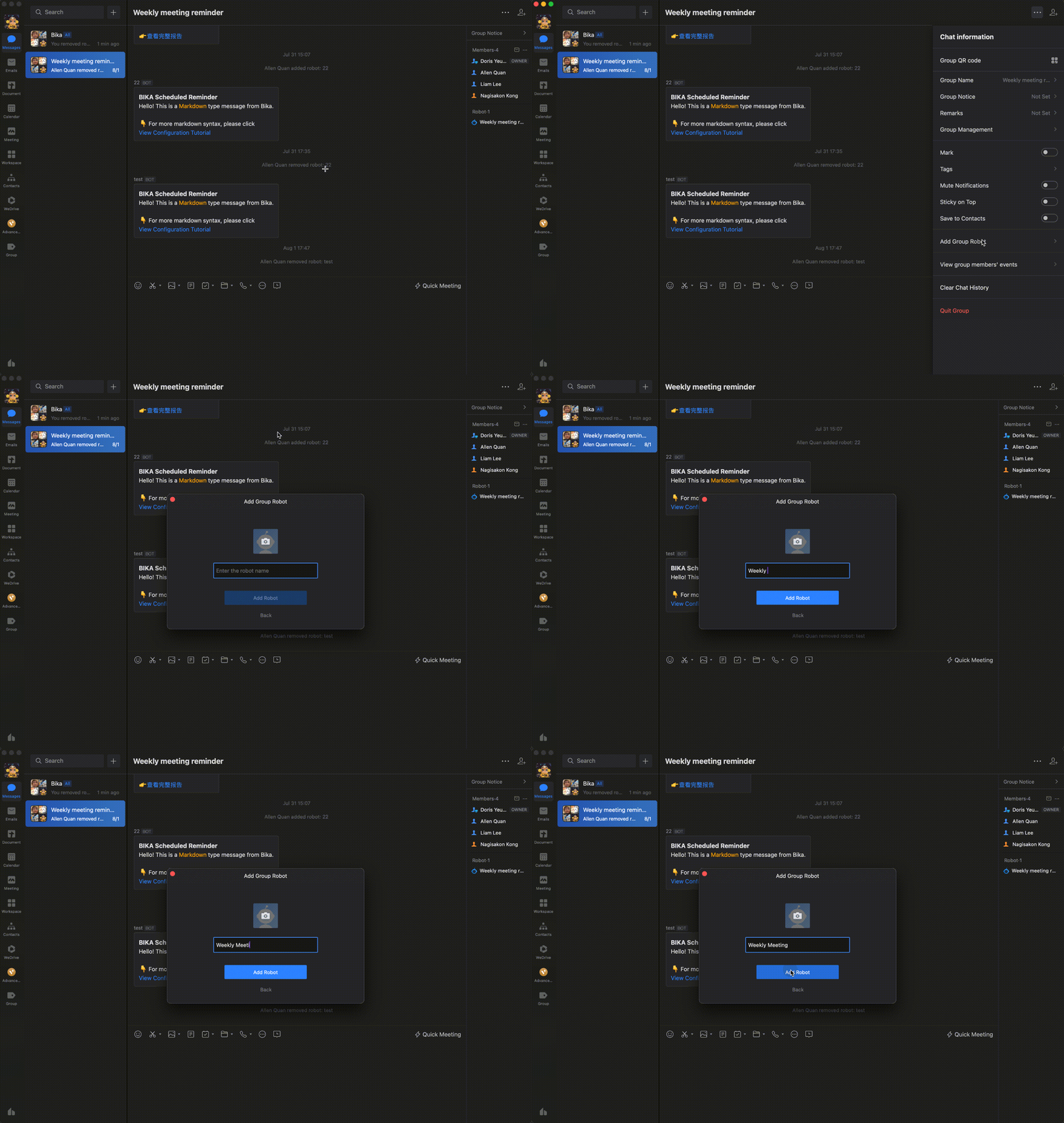
Illustration of adding a group robot to WeCom group

3. Configure the Automation Task

Enter the editing interface of the "Weekly Meeting Reminder (WeCom)" automation task and edit the automation actions in the template.
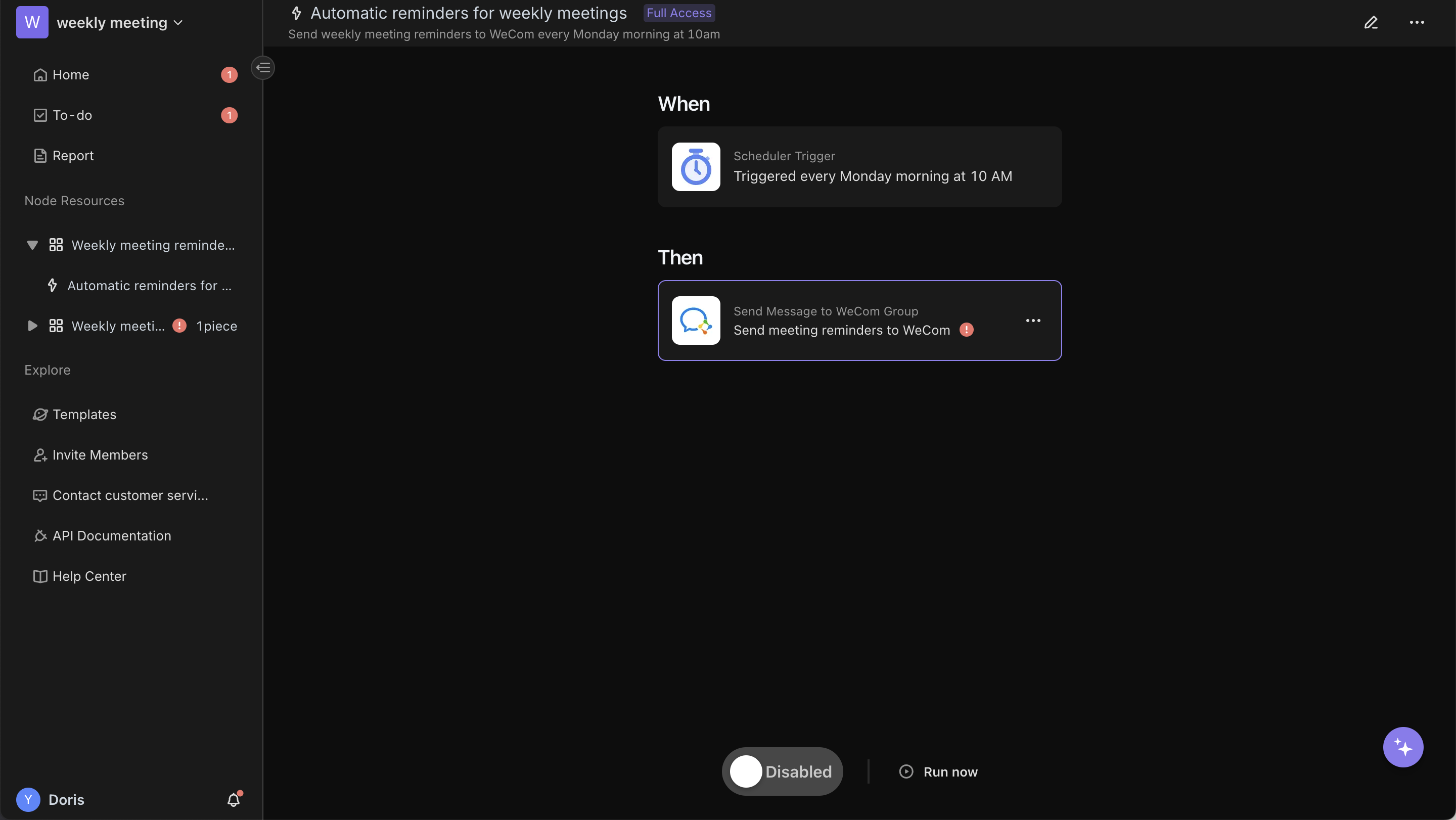
Illustration of automation configuration

Paste the Webhook address of the WeCom group robot into the Webhook URL field of the template's action configuration and save it.
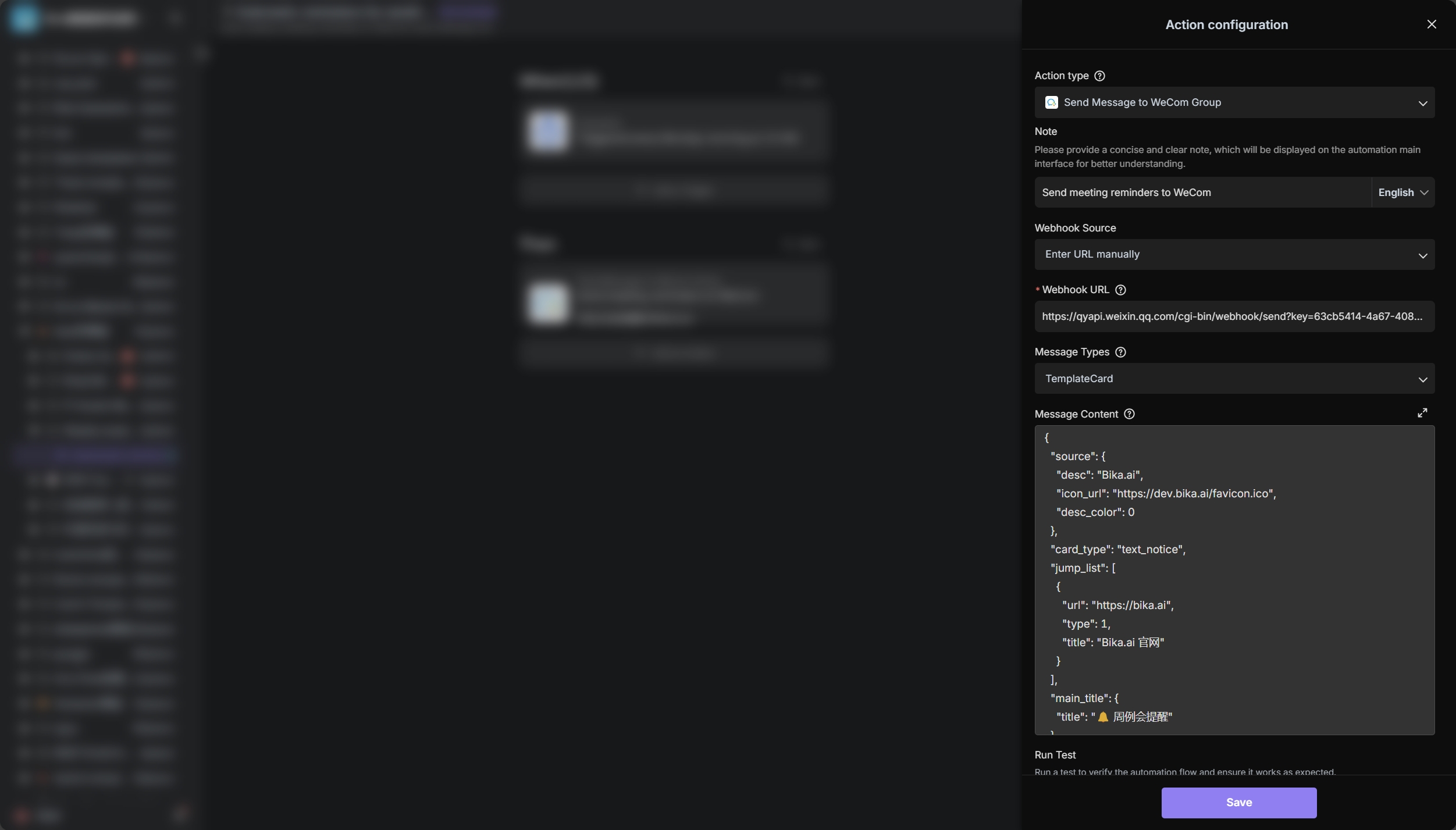
Illustration of Webhook URL configuration

4. Test the Automation Task

In the automation task editing interface, click the "Run Now" button at the upper right corner to manually trigger the automation task once and check if the WeCom group receives the message.
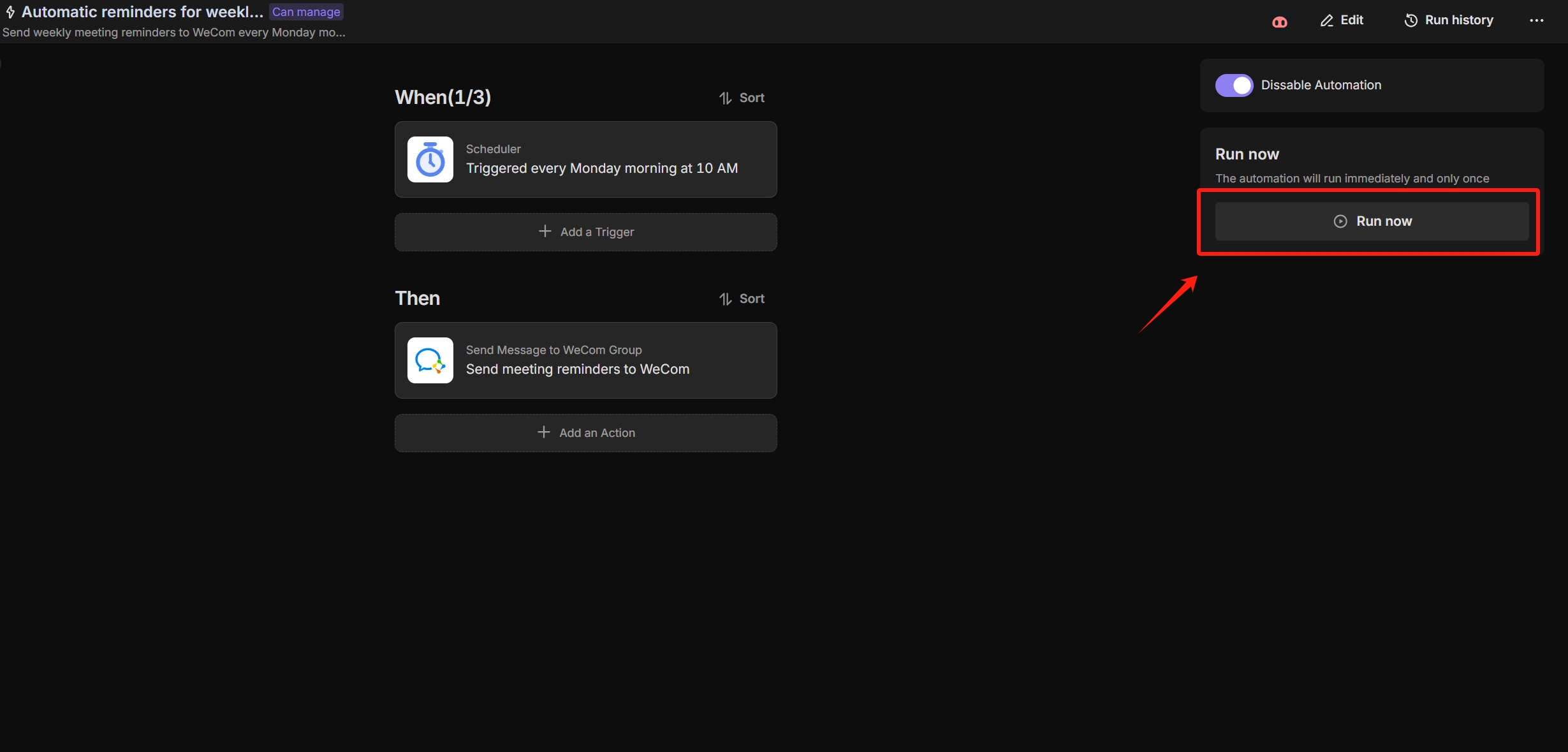
Illustration of running now

5. Start the Automation Task

In the automation task editing interface, click the button on the bottom left to start the automation task. Once you return to the WeChat Work group you've set up, you will see the example card appear.
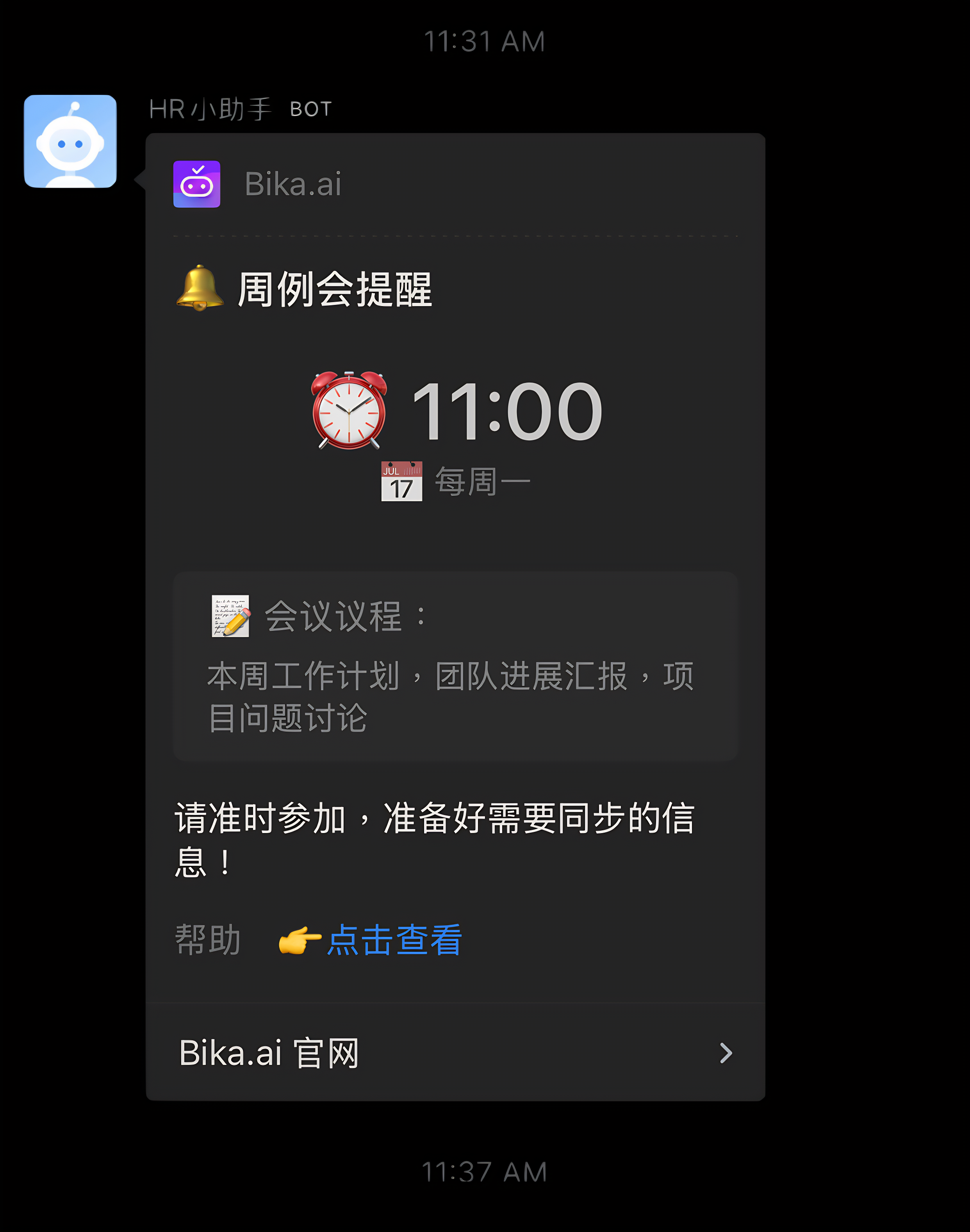
"Card Example Image"

👉 Target Users

  • Project Managers
  • Team Leaders
  • Department Heads
  • Administrative Assistants

⭐ Main Features of This Template

Using the weekly meeting reminder management template will bring the following advantages to the team:

  • Automatic Reminders: Automatically send meeting reminders to ensure team members are aware of the agenda in advance and are prepared, improving meeting efficiency.
  • Seamless Integration: Seamlessly integrates with WeCom, with no need to learn new tools or skills.
  • Simple Configuration: Complete the configuration in just a few steps, with no programming knowledge required.

🎈 Frequently Asked Questions

  1. How to add a group robot in WeCom?

    Open the group where you need to create the robot, click "Chat Info" in the upper right corner, select "Add Group Robot", and then click "Create a New Robot". Follow the prompts to complete the setup and copy the generated Webhook URL. For detailed steps, please refer to here.

  2. Can I customize the format and content of the reminder message?

    Yes, you can customize the content of the reminder message in the "Message Content" section of the template.

  3. How to change the time and frequency of sending reminders?

    You can edit the trigger conditions of the automation task to adjust the sending time and frequency. For example, change it to every Friday afternoon or every working morning.

  4. How to skip reminders if there is no meeting in a certain week?

    You can delete or modify the reminder content for that week in the data table, or temporarily disable the automation task. Another method is to add conditional logic to the automation task to decide whether to send reminders based on specific flags.

  5. Can I set separate reminders for multiple different meetings?

    Yes, you can create different records for different meetings in the data table, or copy and modify the automation task to create separate reminder tasks for each meeting. You can also use different WeCom groups to distinguish reminders for different meetings.
Weekly meeting reminder (WeCom)
Automate your weekly meeting reminders with WeCom using Bika.ai. This template ensures team engagement, seamless corporate communication, and office productivity by sending timely alerts with meeting time, location, and agenda. Improve participation, reduce managerial workload, and streamline planning with automated office alert and meeting planning tools.
call to action

Recommend Reading

Recommend AI Automation Templates

Ticket Manager
Collect, analyze, and manage support tickets from forms and databases with AI. This smart ticketing tool helps operations teams prioritize issues, manage internal feedback, and automate issue resolution for faster, more efficient responses.
Agile Workflow
Agile Workflow
Use the Agile Workflow template as a centralized project management workspace for your Agile team. Streamline sprint tracking and backlog management, handle backlog prioritization with clear views, and improve project visibility across tasks, stories, and sprints. Built‑in agile automation and automated reminders power daily scrum standups, sprint start and end notifications, and overdue task alerts, helping teams stay aligned, reduce manual follow‑up, and keep every sprint on track.
Brand Designer
An AI-powered Brand Marketing Assistant specially designed for start-up digital products, helping you quickly generate promotional content, visual concepts, and catchy slogans for social media and product launch campaigns. Save time while creating professional marketing assets to boost your brand impact on Product Hunt, AppSumo, and other platforms.
3-Day Outreach Email Campaign
Quickly launch a 3-day automated email outreach campaign with this ready-to-use email outreach template. Run an email drip sequence of automated welcome emails for new users to boost activation, retention, and early engagement. This workflow helps you send the right message on each of the first three days, pause the sequence when users reply, and avoid over-contacting them. Ideal for customer success teams, SaaS product managers, marketers, and startup founders who want a simple, automated way to guide new users into your product.
Automated Stock Data Retrieval (Python)
The Automated Stock Data Retrieval (Python) template automatically fetches US stock data every day and writes it into a structured table, giving you clean, consistent time series for analysis. Use it as part of your financial data automation stack to power stock trend analysis, dashboards, alerts, and quantitative analysis data for models and backtests. Designed for financial analysts, investment managers, data scientists, quants, and portfolio managers, it saves time on manual data collection so you can focus on research, strategy, and better investment decisions.
AI Project Issues and Tickets
Use the AI Project Issues and Tickets template as a complete issue tracking template and AI-powered project ticket system for product and project teams. Collect bug tickets, customer support tickets, and feature request form submissions in one place, and manage ticket prioritization and status updates with automated notifications. Every week, an AI summary report aggregates all requests and bugs, giving project managers, product owners, QA engineers, customer support, and business analysts clear insights into user feedback, development progress, and your overall AI project workflow.