Unleash the Power of Agent Swarm: Building Your AI Dream Team for Unprecedented Success


The Dawn of Collective Intelligence: Understanding Agent Swarm
Artificial Intelligence has come a long way from its humble beginnings. For a while, single - agent AI systems dominated the landscape, excelling in tasks like image recognition, language translation, and playing complex games. However, as the complexity of real - world problems grew, the limitations of these single - agent systems became more apparent. Enter the concept of the "agent swarm," a revolutionary approach that is changing the game in the AI world.
An agent swarm can be defined as a collection of multiple AI agents that work together in a coordinated manner to achieve a common goal. These agents are autonomous entities, each with its own set of capabilities and decision - making processes. They communicate, collaborate, and adapt to the changing environment around them. The idea is inspired by natural swarms, such as bees or ants, where the collective behavior of the group far exceeds the capabilities of any individual member.
The agent swarm paradigm is gaining traction because it offers a more robust and flexible approach to problem - solving. In a world where data is vast and problems are multifaceted, the ability to harness the power of multiple agents working in tandem is a game - changer. It allows for the decomposition of complex tasks into smaller, more manageable sub - tasks, which can then be assigned to different agents based on their expertise.
:::: key-takeaways ::::
- An agent swarm is a group of multiple AI agents collaborating to reach a common objective.
- Inspired by natural swarms, it enables the breakdown of complex tasks into smaller parts for more efficient handling.
- This paradigm is becoming popular due to its enhanced robustness and flexibility in problem - solving. ::::
Beyond Single Agents: How Agent Swarms Work
In an agent swarm, the interaction between agents is governed by a set of communication protocols. These protocols define how agents exchange information, share resources, and coordinate their actions. For example, agents might use a publish - subscribe model, where one agent publishes information about a task or a change in the environment, and other agents that are interested in that information subscribe to it.
Task decomposition is a crucial aspect of how agent swarms operate. When faced with a complex problem, the swarm divides the task into smaller sub - tasks. Each agent is then assigned a sub - task based on its capabilities. For instance, in a drug discovery project, one agent might be responsible for analyzing chemical structures, another for predicting biological activity, and yet another for simulating drug - target interactions.
Collaboration among agents leads to emergent behavior. Emergent behavior is the phenomenon where the collective behavior of the swarm exhibits properties that are not present in any individual agent. For example, in a swarm of drones used for mapping a large area, the drones might individually follow simple rules such as maintaining a certain distance from each other and covering a specific area. But as a group, they are able to create a detailed and accurate map of the entire region.
When compared to traditional single - agent AI systems, agent swarms have several advantages. Single - agent systems are often monolithic, meaning that if one part of the system fails, the entire system may break down. In contrast, agent swarms are more robust. If one agent fails, the other agents can often compensate and continue working towards the goal. Additionally, agent swarms are more flexible. They can adapt to changes in the environment or the problem requirements more easily than a single - agent system, which may be hard - coded to perform a specific task in a particular way.
The Promise and Potential Applications of Agent Swarms
Agent swarm technology has the potential to revolutionize a wide range of industries.
In complex scientific research, such as drug discovery, agent swarms can accelerate the process. Multiple agents can work simultaneously on different aspects of the drug development pipeline, from screening potential compounds to predicting their efficacy and safety. In climate modeling, agents can analyze different data sources, such as satellite imagery, weather data, and oceanographic data, and collaborate to create more accurate climate models.
Automated enterprise workflows and supply chain optimization can also benefit greatly from agent swarms. Agents can monitor different parts of the supply chain, from raw material sourcing to product delivery. They can predict disruptions, optimize inventory levels, and coordinate transportation to ensure smooth operations. For example, if there is a delay in the delivery of raw materials, one agent can inform other agents responsible for production scheduling, who can then adjust the manufacturing plan accordingly.
Financial market analysis and trading is another area where agent swarms can make a significant impact. Agents can analyze market trends, news, and social media sentiment in real - time. They can collaborate to make more informed trading decisions, taking into account multiple factors simultaneously.
In robotics and autonomous systems, agent swarms are already being used in applications such as drone swarms for surveillance, mapping, and delivery. In smart factories, swarms of robots can work together to assemble products, with each robot performing a specific task in a coordinated manner.
Even in gaming and virtual environments, agent swarms can create more realistic and dynamic experiences. Non - player characters (NPCs) in a game could be represented as agents in a swarm, interacting with each other and the player in a more natural and intelligent way.
Notable in this field is the "OpenAI Swarm," which is one of the initiatives exploring the potential of multi - agent systems. While we won't delve too deeply into it, it's part of the broader movement towards harnessing the power of agent swarms.
For more information on agent swarms, you can refer to these reputable sources: RelevanceAI's article on agent swarms and CIO's article on agent swarms as an evolutionary leap in intelligent automation.
From Theory to Practice: Building Your AI Team with Bika.ai
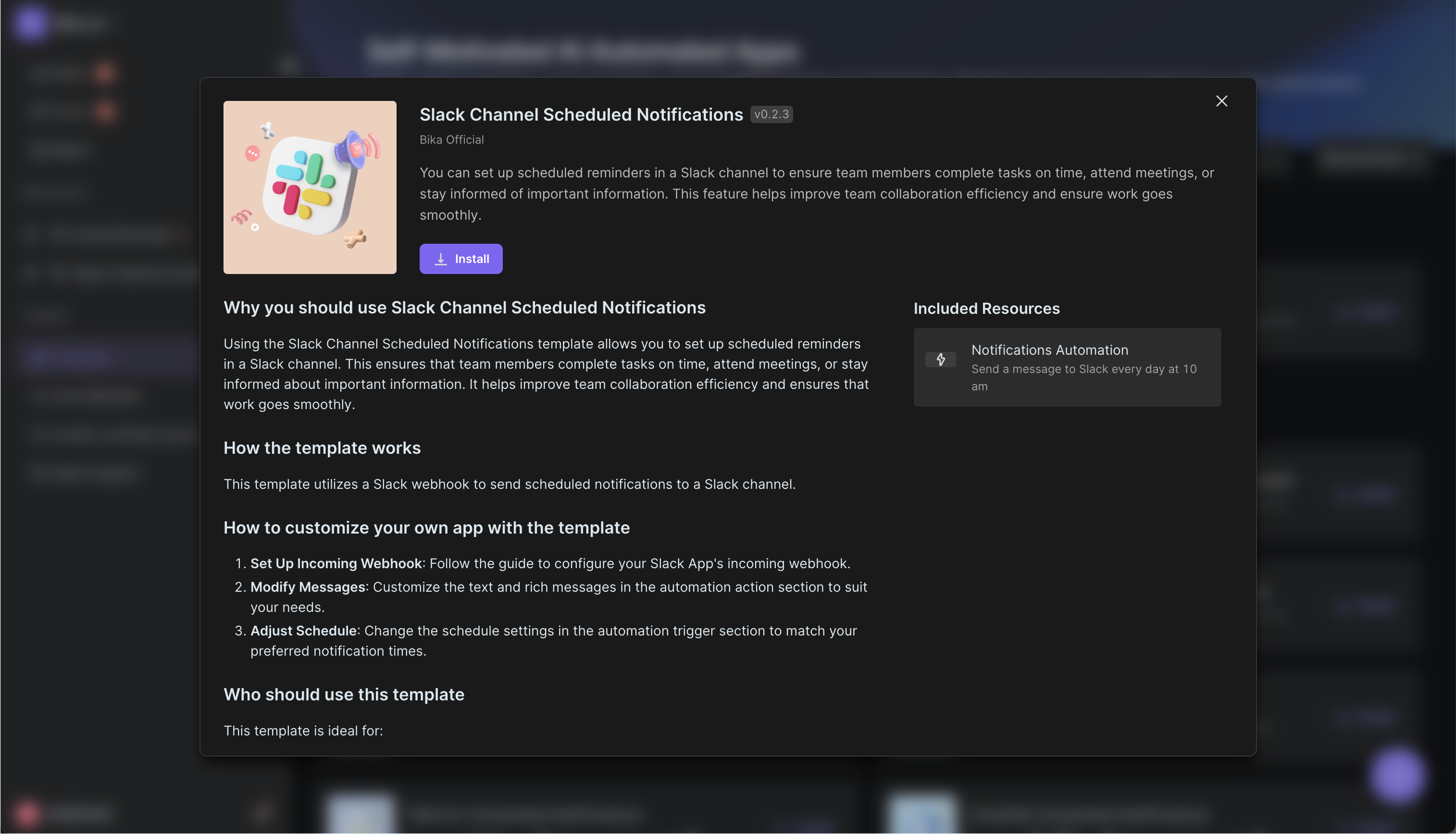
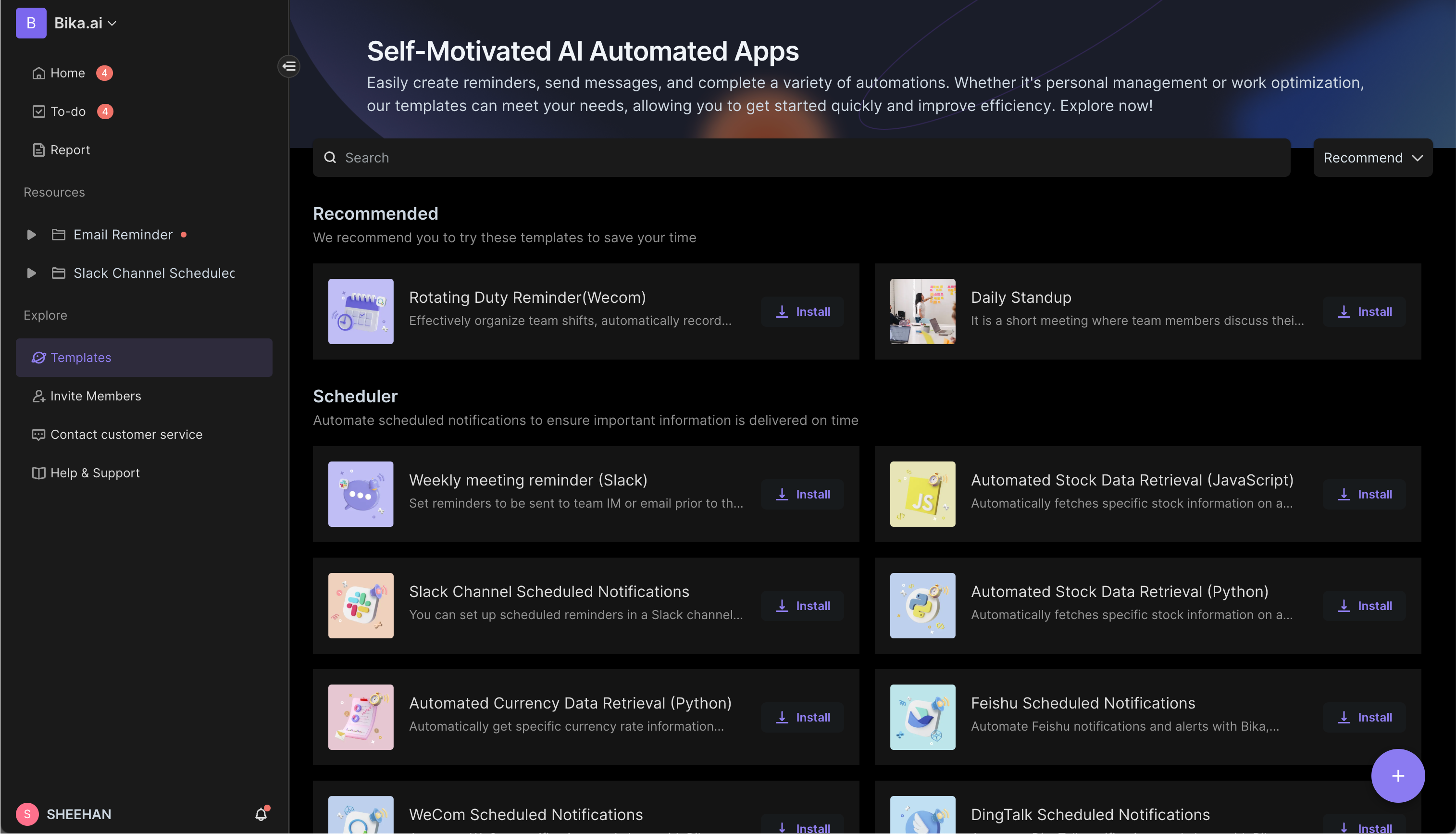
The concept of an agent swarm, once confined to the realm of academic research, is now becoming accessible to a wider audience. Bika.ai is at the forefront of this trend, providing a platform that allows users to build their own AI teams, essentially creating agent swarms tailored to their specific needs.
Bika.ai enables users to assemble different AI agents or functionalities, much like building blocks. These can be combined to address various tasks and workflows across different domains. Whether it's in business, research, or any other field, Bika.ai simplifies the process of creating and deploying these AI teams. The platform offers a high level of customization, allowing users to fine - tune the behavior of each agent and their interactions within the swarm.
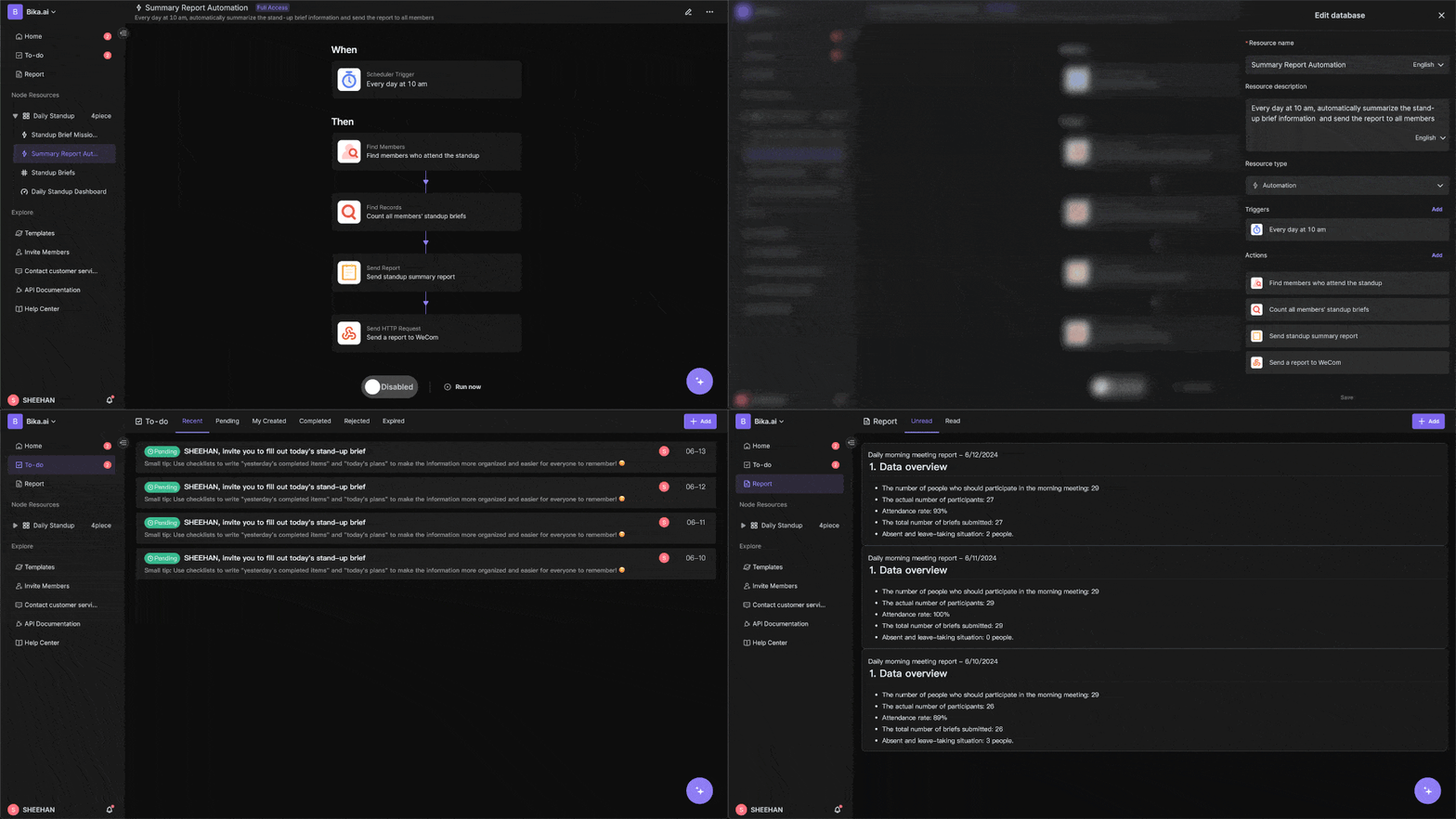
Spotlight on the Employee Engagement Survey Template: An Example AI Team in Action
The Employee Engagement Survey Template on Bika.ai serves as an excellent example of an agent swarm in action.
Overview
This template is designed to help organizations efficiently measure employee engagement and satisfaction. It centralizes employee feedback and uses automated email notifications to remind HR teams to review submissions. By doing so, it helps identify differences in employee experiences and supports data - driven decisions for goal setting and workplace improvement.
How to Use
- Employee Feedback Table: This is where employees record their feedback, including responses to survey questions. It serves as a central repository for all the data collected.
- Employee Directory Table: Here, employee information such as roles, employment status, team affiliations, birthdays, and onboarding details are stored. The table also has the added functionality of automatically calculating age and upcoming birthdays.
- Submit Feedback Form: Employees use this form to submit their feedback, which is then linked to the feedback table.
- Automated Reminders: Once feedback is submitted, the system automatically notifies the HR team via email, prompting them to review the content.
Applicable People
- HR Professionals: They can gain valuable insights from the data to improve employee satisfaction. For example, if a large number of employees from a particular department are dissatisfied, HR can investigate the root causes.
- Managers: Managers can understand the engagement levels of their teams and address any related issues. If a team has low engagement, the manager can take steps to boost morale.
- Executives: Executives can use the data - driven insights to develop company goals and strategies. For instance, if overall employee engagement is low, they can allocate resources to improve the workplace environment.
Use Cases
- Measure employee engagement and satisfaction levels: By collecting and analyzing the feedback, organizations can get a clear picture of how their employees feel.
- Identify differences in employee experiences across teams or locations: This can help in tailoring initiatives to specific groups.
- Inform organizational goals and improve the workplace environment: The data can be used to make informed decisions about changes that need to be made.
Users can easily leverage this template as it is, or adapt it for their own needs in different domains or scenarios. For example, a non - profit organization could use it to measure volunteer engagement, with some minor modifications.
Try the Employee Engagement Survey Template
The Future is Collaborative: Empowering Users with Agent Swarms
The agent swarm technology represents a significant shift in the way we think about AI. It has the potential to transform industries, making problem - solving more efficient and effective. Platforms like Bika.ai are democratizing access to this powerful technology, allowing users from all walks of life to build their own AI teams.
The value proposition is clear: moving from individual AI tools to coordinated AI teams can lead to enhanced problem - solving capabilities. Instead of relying on a single AI to handle a complex task, organizations and individuals can now assemble a team of specialized agents that work together seamlessly.
We encourage readers to explore Bika.ai and start building their own AI teams. By doing so, they can redefine their approach to automation and stay ahead in an increasingly competitive world.
FAQ
Q: What is the main difference between a single - agent AI system and an agent swarm? A: A single - agent AI system is monolithic, meaning that if one part fails, the entire system may break down. In contrast, an agent swarm is more robust as multiple agents can compensate if one fails. Also, agent swarms are more flexible, able to adapt to changes in the environment or problem requirements more easily, while single - agent systems may be hard - coded for a specific task.
Q: How can the Employee Engagement Survey template on Bika.ai be customized for different organizations?
A: The template can be customized by modifying the survey questions in the Employee Feedback Table to suit the specific needs of an organization. Additionally, the automated reminders can be adjusted in terms of frequency and content. For different types of organizations like non - profits or startups, the data fields in the Employee Directory Table can be changed to capture relevant information.
Q: What are some other industries that can benefit from agent swarm technology apart from those mentioned in the article? A: Education is one such industry. Agent swarms could be used to personalize learning experiences for students. For example, one agent could analyze a student's learning style, another could recommend relevant study materials, and yet another could monitor progress and adjust the learning plan accordingly. Healthcare is another area, where agent swarms could assist in patient diagnosis by analyzing multiple data sources such as medical history, test results, and genetic data.
Recommend Reading
- Mastering My Apps in 2025: Organize, Optimize, and Automate for Peak Productivity
- Choosing the Right AI Content Detector in 2025: A Comprehensive Review
- Choosing the Right AI Content Detector: A 2025 Comparison Guide
- Top RSS Reader Picks for 2025: Your Guide to Smarter Content Curation & Advanced Automation
- Elevate Your Message: Top Presentation Software Alternatives to PowerPoint in 2025
Recommend AI Automation Templates